

Uzeyir Hajibeyli
Bulbul. Immortal artist
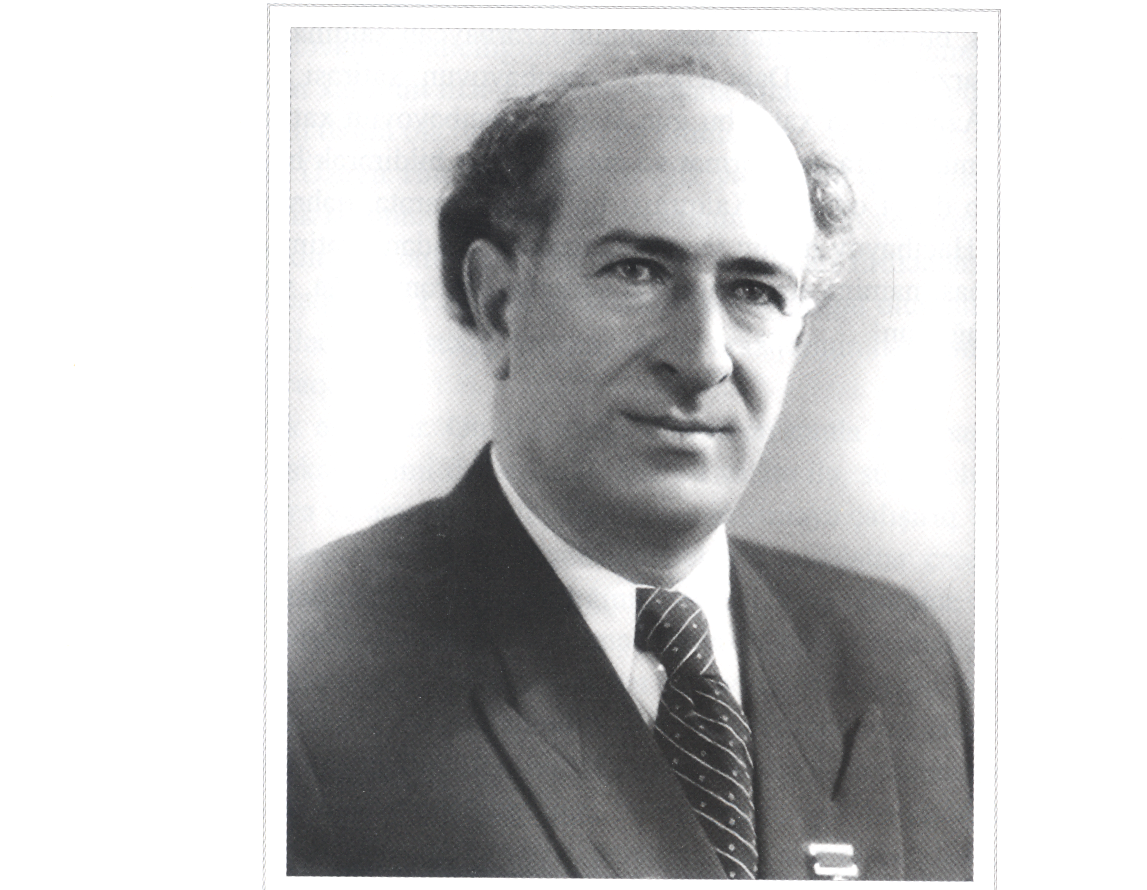
The memory of Uzeyir Hajibeyov is dear and unforgettable to all Soviet peoples. The beloved Uzeyir bey introduced new ideas to the development of Soviet opera dramaturgy. He laid a solid foundation for the advancement of Azerbaijani classical music. Uzeyir bey’s scientific theory plays a significant role in the development and flourishing of Azerbaijani Soviet music, particularly the music of Eastern peoples. In his book titled “Fundamentals of Azerbaijani Music”, Uzeyir bey elucidated the scientific foundations of the rich Azerbaijani music tradition.
When speaking about Uzeyir Hajibeyov’s great contributions to our musical culture, the great Russian composer Glinka comes to mind. The closeness between these two artists lies in the fact that just as Glinka is the founder of Russian opera, Uzeyir bey was not only the founder of opera in Azerbaijan but also in the entire East and created a new musical thinking.
I was introduced to this great composer by Abdurrahim bey Hagverdiyev. Abdurrahim bey Hagverdiyev, who was the head of the Arts Department under the People’s Commissariat of Education, introduced me to Uzeyir bey in his office on the second day of my performance in the role of Kerem in the opera “Asli and Kerem” and said: "This is our Bulbul. Yesterday, in the role of Kerem, he delighted the audience with his nightingale-like singing."
At that time, Uzeyir bey was the head of the music department. His handsome, charming appearance, slightly wavy hair parted to both sides, and his simple yet meaningful gaze impressed me so deeply that I could not take my eyes off his face even for a moment.
Sensing my admiration, Uzeyir bey jokingly said: “Well, do you want me to praise you?”
Days passed. I became the protagonist of Uzeyir bey’s works. Both of us devoted ourselves to art and science. We visited Moscow and Leningrad, where we met with prominent figures of the arts. Later, I went to Italy for four years to study. During that time, Uzeyir bey and I corresponded by letter. He would send his works to me in Italy for reading and study. After returning from Italy, in 1932, the vigorous creative phase of the Soviet people demanded a new development in our classical music. A new musical mindset and new intellectual characteristics posed numerous important challenges for composers. At that time, a revival was beginning in our musical art. Alongside Uzeyir bey, composers such as Muslim Magomayev, Zulfugar Hajibeyov, and Asaf Zeynalli—who was trained in the music schools of Baku and Leningrad—were composing new works. Muslim Magomayev was working on the opera “Nargiz”, and Glière on “Shahsanam”. Uzeyir bey, meanwhile, was preparing to compose the opera “Koroghlu”. In addition, he was writing short-form works celebrating the new Soviet life, such as “A Komsomol Girl”, “Mazut”, and “The Factory Awaits You”.
In 1934–1935, Glière’s opera “Shahsanam” and Muslim Magomayev’s opera “Nargiz” were staged.
Finally, our great composer delivered the piano score of the opera “Koroghlu” to the theater. This event became a celebration of our operatic art. After its premiere, the opera “Koroghlu” found a place in the hearts of audiences and soon began to be frequently performed on stages and broadcast across the brotherly republics by numerous singers.
I have performed the role of the national hero Koroghlu on our theater’s stage more than 400 times. Each time I play this role, I am captivated by Uzeyir bey’s artistry. I have listened to the overture of this opera countless times. When the overture begins, it stirs the listener deeply. It is hard to find a music enthusiast who is not moved by these musical passages. This overture resonates as the hero of the opera itself and is regarded as the interpreter of all the events.
The power of Uzeyir’s artistry lies in the fact that our composer was intimately familiar with the subtleties of Azerbaijani folk music and mugham, appreciating their beauty, studying them, and conducting extensive explorations to create new works that the people would love. To illustrate this point, allow me to provide one or two examples.
In the first act of the opera “Koroghlu”, Nigar’s aria and the romance “Without You”, composed to the words of Nizami, are unforgettable. Both of these pieces are written in the same act and based on the mugham Shikasteh-Fars. Nigar’s aria begins with Shikasteh-Fars, the middle section is in Erag-Panjigah, then it returns to Shikasteh-Fars through a different melodic path, concluding with the breath of Segah.
The ghazal “Without You” also begins with Shikasteh-Fars. Its middle section transitions into Manandi-Mukhalifi. After evoking the breath of Uzzal, it returns to Shikasteh and concludes with the breath of Segah in the same act. Yet, these two pieces are not alike. In Nigar’s aria, her hatred toward tyrants, her pure love for Rovshan, her belief that true love is greater than wealth, her unwavering affection for Rovshan, and her commitment to remain faithful in love until the end are all gloriously expressed.
The ghazal “Without You”, on the other hand, is the heartbeat of solitude, the emotional tremor of being without a beloved. Just consider how different these themes are! Completely distinct compositions—yet both are written in the same mode. And this is precisely where the immortality of Uzeyir’s art lies! The ghazal “Beloved One” and Firuze’s aria are based on the Bayati-Shiraz mugham. When I listen to Firuze’s aria performed by Zehra Rahimova, it feels as though I have experienced the entire opera. Though composed in the same mugham mode for the female voice (soprano), the aria conveys a complex and expansive idea, while the ghazal “Beloved One” offers a poetic tribute to a beautiful woman.
The reason for my friendship with Uzeyir bey was not merely my reading of his works or my performance as the leading character in his operas. The foundation of our friendship was the unity of ideas—an echo of our shared love for our socialist Motherland and our people.
Months chase one another, years pass by, and the seasons take turns. Among these, spring is the most beautiful, the most heartwarming, the most joyful. Uzeyir’s creativity, Uzeyir’s art, is like the violets, jasmines, and fragrant blossoms of spring. His music, like these flowers, will always bring joy to the heart, soothe the soul, and awaken in people a passionate desire to live, to love, and to be loved.