

Uzeyir Hajibeyli
The life and work of the great Azerbaijani composer Uzeyir Hajibeyli
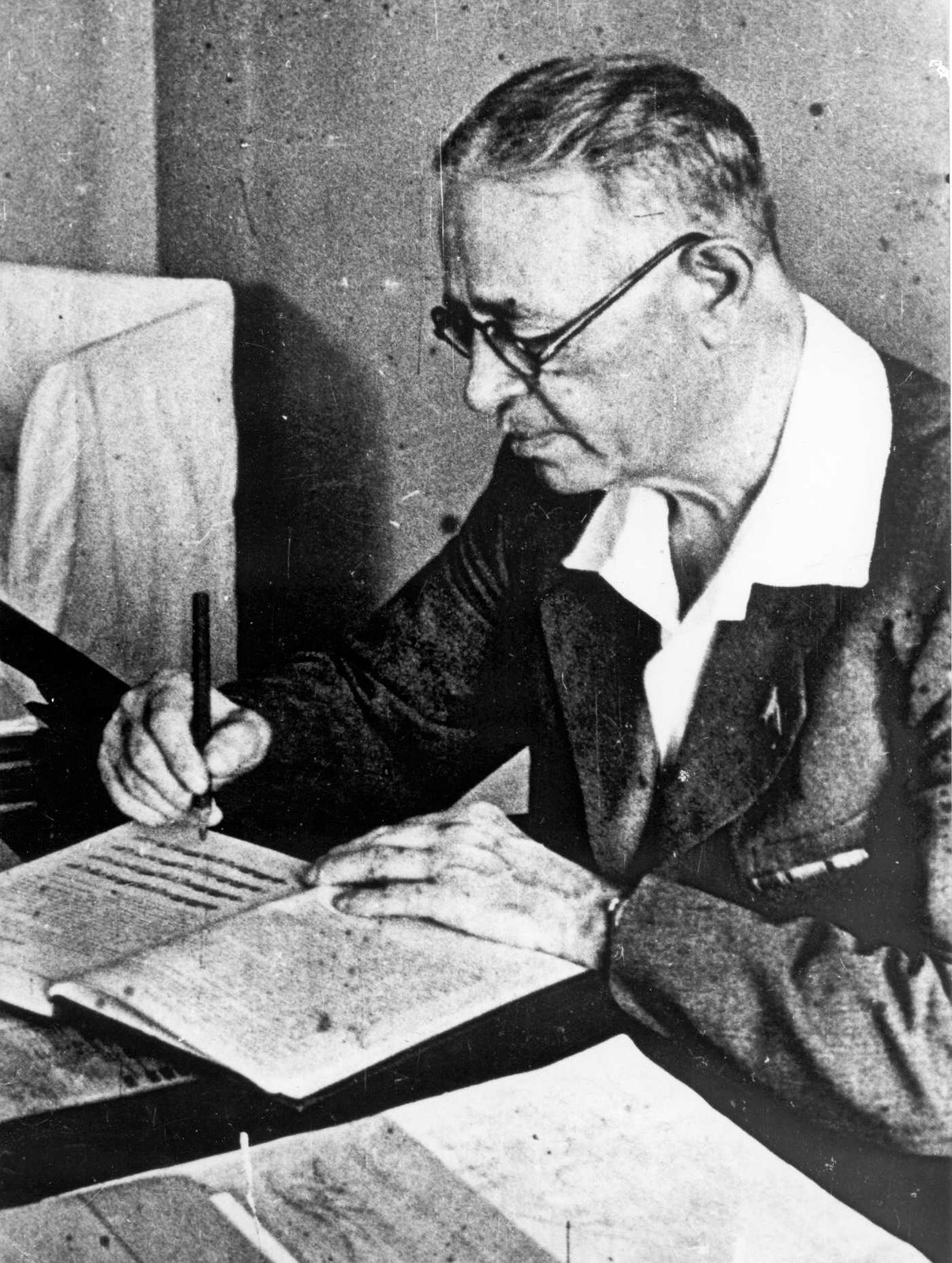 “The power of Uzeyir's language, the charm of Uzeyir's music, and the perfection of Uzeyir's science create a world that keeps us in its sphere of attraction for a lifetime. The greatness of Uzeyir's art lies in the fact that, through his musical creativity, he has transformed us into listeners and heroes of his works throughout our lives.”
First Vice-President of the Republic of Azerbaijan
Mehriban Aliyeva
Uzeyir Abdulhuseyn oghlu Hajibeyli, the brilliant Azerbaijani composer known for creating the first opera in the East, was born on September 18, 1885, in the village of Aghjabadi, Garabagh, into the family of Abdulhuseyn Hajibeyli, the village clerk. He was a great musicologist-scientist, a talented publicist, playwright, teacher, well-known public figure, People's Artist, laureate of State Prizes, and a full member of the Azerbaijan Academy of Sciences.
Soon, the Hajibeyli family relocated to Shusha, one of the most beautiful centers of Azerbaijani culture. Uzeyir grew up in the city’s rich musical environment.
The father of the future composer served for a long time as the personal secretary to the renowned Azerbaijani poetess, public figure, and daughter of the Garabagh khan, Khurshidbanu Natavan. Uzeyir's mother, Shirin Aliverdibeyova, grew up in the poetess's household, and the composer's grandfather and Natavan were foster siblings. The Hajibeyli family welcomed five children: Sayad, Abuhayat, Zulfugar, Uzeyir, and Jeyhun. Their parents' deep interest and passion for literature and music were passed down to their children. The family played a significant role in nurturing the literary and musical talents of the sons, Zulfugar, Uzeyir, and Jeyhun.
Uzeyir's uncle, Aghalar Bey Aliverdibeyov, was a renowned folk music expert and Uzeyir's first music instructor.
In 1896, Uzeyir, his older brother Zulfugar, and their uncle Hajibey Hajibeyli met the poetess Khurshudbanu Natavan, as a document kept in Natavan's archive reported. Zulfugar Hajibeyli authored this document, and Uzeyir Hajibeyli verified its authenticity. Zulfugar Hajibeyli writes in this document:
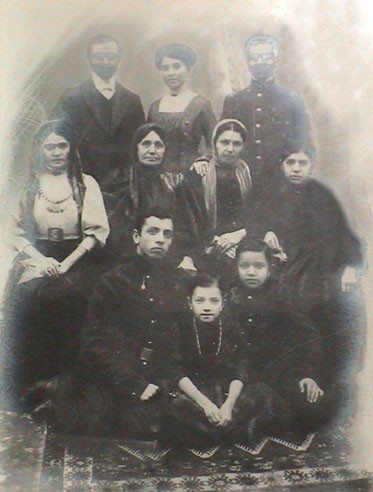 “In addition to my previous note, I confirm that in 1896, while leaving for Tbilisi to take the exam for the teachers' school in Gori, my brother Uzeyir Hajibeyli and I visited the then khan's daughter, Khurshudbanu Beyim (Natavan), with the help and accompaniment of my uncle Hajibey Hajibeyli, to ask her for her blessing.”
Knowing Natavan gave young Uzeyir access to Shusha’s finest musical communities and majlisis. Shusha's rich musical and performing traditions profoundly impacted Uzeyir's musical education. His first music teacher was his uncle A. Aliverdibeyov, a true expert in Azerbaijani folk music.
After graduating from the seminary, Uzeyir worked as a teacher in the village of Hadrut for a while. In 1905, just before the revolution, he arrived in Baku and taught the children of workers in the Bibiheybat oil district. Thus, his socio-political and educational activities began.
Uzeyir Hajibeyli received his primary education at a two-class Russian-Azerbaijani school here. He attended the Gori Teachers' Seminary from 1899 to 1904. At the seminary, he learned to play the violin and baritone and recorded samples of folk songs. His years at the seminary significantly shaped Uzeyir Hajibeyli's worldview. During this time, he became well-acquainted with advanced world culture, mastered the works of Russian and Western European musical classics, and transcribed folk song samples into musical notation. After graduating from the seminary, Hajibeyli was appointed as a teacher in Hadrut, Jabrayil district, in 1904.
In 1905, he moved to Baku and taught at Bibiheybat and later at the Saadat school. In 1907, he published "Arithmetic Problems" in Baku in Azerbaijani and "Turkic-Russian and Russian-Turkic Dictionary of Political, Legal, Economic, and Military Terms Used in the Press."
Uzeyir Hajibeyli began his artistic career in journalism. He published numerous articles, feuilletons, and satirical miniatures on significant socio-political and educational issues of the time in the newspapers "Ittihad," "Hayat," "Irshad," "Taraggi," "Hagigat," "Igbal," "Yeni Igbal," and in the magazine "Molla Nasraddin" under the titles "Ordan-burdan," "O yan - bu yan," and others, using pseudonyms such as "U," "Filankas," and more. During this period, Uzeyir Hajibeyli also wrote many fascinating stories, satirical miniatures, and journalistic articles, and he translated N.V. Gogol's story "The Overcoat" into Azerbaijani.
Uzeyir Hajibeyli's opera "Leyli and Majnun," performed at the H.Z. Taghiyev Theater in Baku on January 12, 1908, established a foundation for opera not only in Azerbaijan but also across the Muslim East. 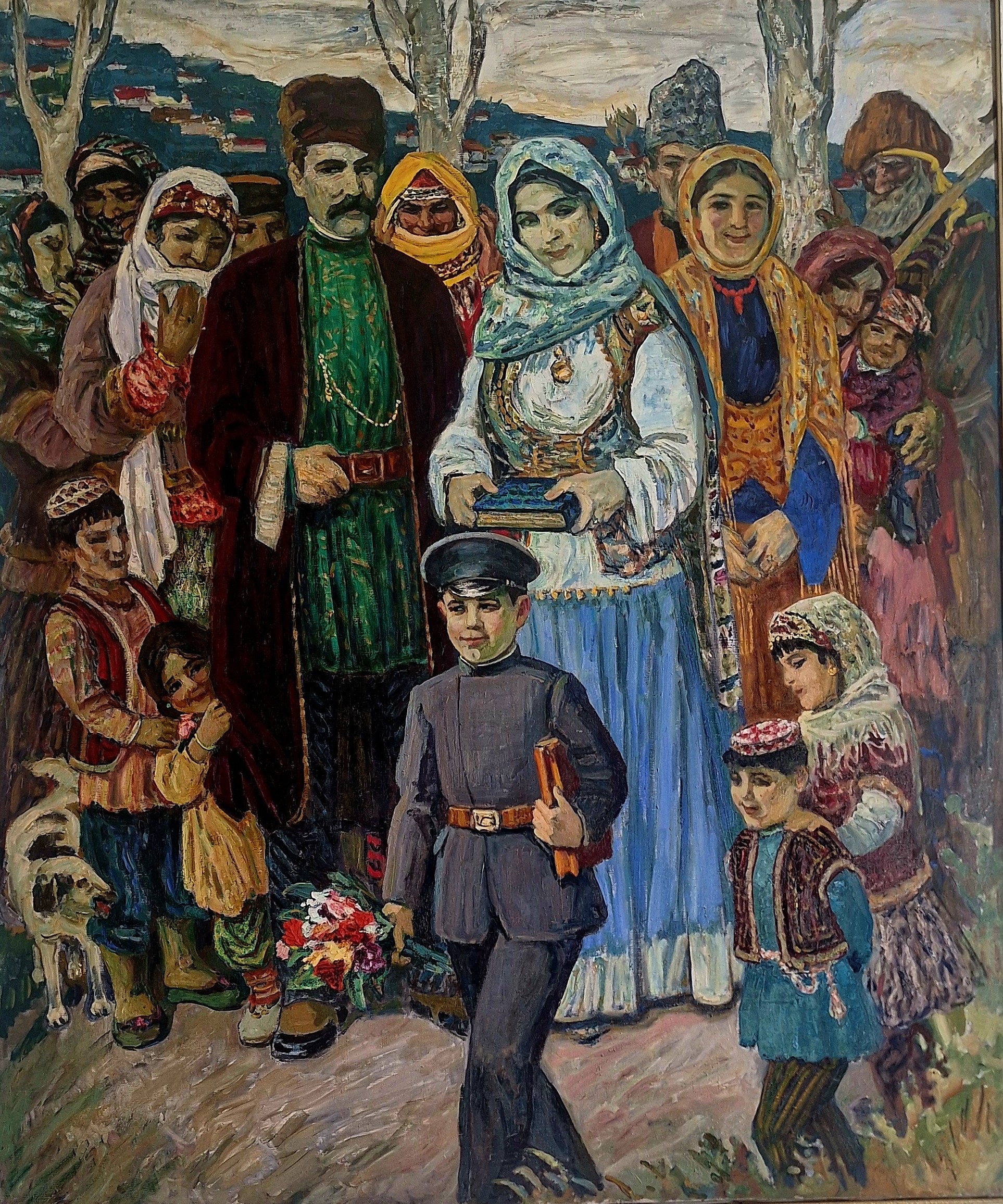
Uzeyir Hajibeyli composed the mugham operas "Sheikh Sanan" (1909), "Rustam and Sohrab" (1910), "Shah Abbas and Khurshidbanu" (1912), "Asli and Karam" (1912), and "Harun and Leyla" (1915) consecutively from 1909 to 1915. Uzeyir Hajibeyli composed the librettos for these operas based on folk epics, legends, and motifs from Ferdowsi's "Shahnameh." Uzeyir Hajibeyli continued the stylistic features and aesthetic artistic principles of "Leyli and Majnun" in his subsequent operas. He gave little space to mughams in "Sheikh Sanan" and composed most of the music himself. In his opera "Asli and Karam," which he composed based on the folk epic, Uzeyir Hajibeyli used ashug music and mughamat. Uzeyir Hajibeyli's work in dramaturgy is significant in Azerbaijani literature. He is the founder of the musical comedy genre in Azerbaijan. It should also be noted that Uzeyir Bey wrote the texts of the musical comedies. His musical comedies "Husband and Wife," which premiered in 1910, "If Not That One, Then This One," which premiered in 1911, and "Arshin Mal Alan," which premiered in 1913, reflected the life, folk customs, and traditions of pre-revolutionary Azerbaijan. In 1912, Uzeyir Hajibeyli traveled to Moscow to further his musical education, where he took lessons at the music courses of the Philharmonic Society from N.M. Ladukhin on solfeggio and N.N. Sokolovsky on harmony. In 1914, he studied at the St. Petersburg Conservatory. The Petersburg period played an important role in Uzeyir Hajibeyli's work; it was there that he created the musical comedy "Arshin Mal Alan." However, the outbreak of World War I and financial difficulties forced Uzeyir Hajibeyli to abandon his education.
Uzeyir Hajibeyli worked for the "Azerbaijan" newspaper during the rule of the Azerbaijan Democratic Republic in 1918-20. His active literary work during these years was connected with this newspaper. Uzeyir Hajibeyli's writings were published daily or every other day in the "Azerbaijan" newspaper; Sometimes two articles appeared in one issue with different signatures. The newspaper's first editor was Uzeyir Hajibeyli's younger brother, Jeyhun Bey. Uzeyir Hajibeyli was the newspaper’s editor-in-chief from January 1919 to April 27, 1920. Uzeyir Hajibeyli led the newspaper, determined its ideological direction, and helped strengthen Azerbaijan's independence. The newspaper published several articles by Uzeyir Hajibeyli, including "Our Historical Day", "Andranik's Case", "What is Our Mission?", "Lankaran Tragedy", "Who Was Thinking What", "Garabagh", "The Denikins Within Us", "Armenia and Azerbaijan Relations", "Impression", and more. All these articles demonstrate Uzeyir Hajibeyli as a visionary politician and talented publicist.
In general, the 1920s marked the years of "organization" in Azerbaijani music, and Uzeyir Hajibeyli was at the forefront of these organizational efforts. Hajibeyli, who headed the music department of the Arts Department under the People's Commissariat of Education of Azerbaijan, defined the future development program of Azerbaijani music in the article "Issues related to our musical mission" published in the magazine "Sanaye-nafisa" (lit. Fine Arts) (1921, No. 1). The article discussed issues such as training professional musical personnel, developing the basics of national music, studying world music, and so on. Although the development of national opera in the 1920s and 1930s caused some controversy, Azerbaijani music developed along the path taken by U. Hajibeyli, M. Magomayev, and their supporters.
Uzeyir Hajibeyli organized the first music school for Azerbaijani students in Baku in 1921 - the Azerbaijan State Turkic Music School. This educational institution, which later operated as a technical school, was merged with the Azerbaijan State Conservatory in 1926. Uzeyir Hajibeyli, who began his career at the Azerbaijan State Conservatory in 1926, taught theory, harmony, and the basics of Azerbaijani music and created the first multi-voice Azerbaijani choir at the conservatory.
In 1927, Uzeyir Hajibeyli and M. Magomayev published the first "Azerbaijani Turkic Folk Songs" collection. The composer organized the first note folk instrument orchestra under the Azerbaijan Radio Committee in 1931. The orchestra's repertoire included works by M. Glinka, W. Mozart, F. Schubert, G. Bizet, and others, as well as Uzeyir Hajibeyli's 1st ("Chahargah") and 2nd ("Shur") fantasies, composed for this orchestra in 1931-32. Hajibeyli himself conducted the orchestra at first. Among Uzeyir Hajibeyli's chamber instrumental works, the trio "Ashigsayaghi" (1931), composed for violin, cello, and orchestra, is one of the first ensemble pieces in Azerbaijani music. Hajibeyli began his creative career in the former Soviet era with the genre of mass songs ("The Cavalry Song", "Pilots"). He also composed several cantatas in the 1930s, including one for the 1000th anniversary of Ferdowsi (1934), "Immortal Artist" dedicated to M.F. Akhundov (1938), and others.
The opera "Koroghlu," which premiered at the Azerbaijan Opera and Ballet Theater on April 30, 1937, with libretto by H. Ismayilov and M.S. Ordubadi, is the pinnacle of Uzeyir Hajibeyli's work. In this opera, which is considered one of the pearls of Azerbaijani and old Soviet opera art, Uzeyir Hajibeyli created, for the first time, elaborate arias, mass choral scenes, various ensembles, ballet numbers, and recitatives, adhering to the classical opera form. The basis of the opera's musical dramaturgy is the monumental choral scenes. In addition to being a folk hero, Koroghlu is also an ashug. Therefore, the opera was composed primarily in the style of ashug music. Uzeyir Hajibeyli achieved a vibrant sound by including Azerbaijani folk musical instruments in the symphony orchestra in the opera "Koroghlu."
During the 1941-45 war, Uzeyir Hajibeyli composed patriotic songs such as "The Call", "Farewell", "A Mother's Advice to Her Son", "Nurse", "Warriors' Anthem", and others, as well as the play "War" (1941) for the folk instrument orchestra, and the cantata "Homeland and the Front" (1942). Among the vocal musical works he created during these years, the romance-ghazals "Without You" (1941) and "Sweetheart" (1943), dedicated to the 800th anniversary of the birth of Nizami Ganjavi, hold a special place. Uzeyir Hajibeyli worked on the opera "Firuza" in the last years of his life. Only Firuza's aria remains from this unfinished opera.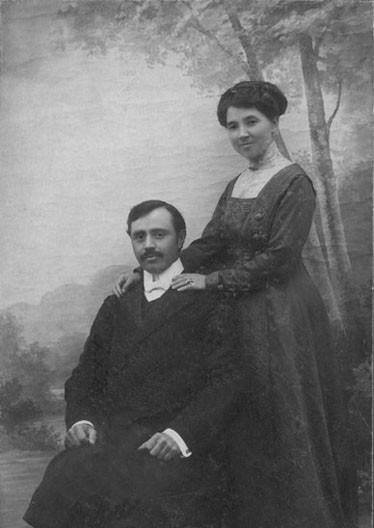
Uzeyir Hajibeyli is the music author for the National Anthems of the Azerbaijan Soviet Socialist Republic (1945) and the modern Azerbaijan Republic (1992).
Uzeyir Hajibeyli is a brilliant composer who radically changed Azerbaijani music. He enriched Azerbaijani national music, which existed as an oral folk musical art until the early 19th century, with Western European and Russian composition schools’ achievements, forms, and genres. He created an organic unity of Eastern and Western musical systems in his operas and comedies, and his musical works in other genres. Uzeyir Hajibeyli removed the barrier that was once considered impassable between Eastern and Western musical cultures, and defined the future development prospects and aesthetic principles of Azerbaijani and Eastern music in general. Uzeyir Hajibeyli created his original style, the Uzeyir style, by combining the stylistic features of all genres of Azerbaijani folk music, songs, dances, mugham, and ashug creativity in his music.
Uzeyir Hajibeyli was also a great musicologist. He laid the foundation for modern Azerbaijani scientific musicology, wrote many articles on music, and conducted research. In his fundamental research work "Fundamentals of Azerbaijani Folk Music" (1945), he showed the regularities and national characteristics of Azerbaijani music, which has an ancient history, based on a deep analysis of the examples and forms of folk music. The issues raised by Uzeyir Hajibeyli in theory found practical solutions in the composer's work, such as the widespread use of polyphony in Azerbaijani music, the organic unity of the major-minor system based on the national mode, and more. Uzeyir Hajibeyli raised a generation of talented composers and musicologists. Gara Garayev, Fikrat Amirov, Niyazi, Suleyman Alasgarov, Jahangir Jahangirov, Shafiga Akhundova, and others were students of Uzeyir Hajibeyli.