

Uzeyir Hajibeyli
“Leyli and Majnun”
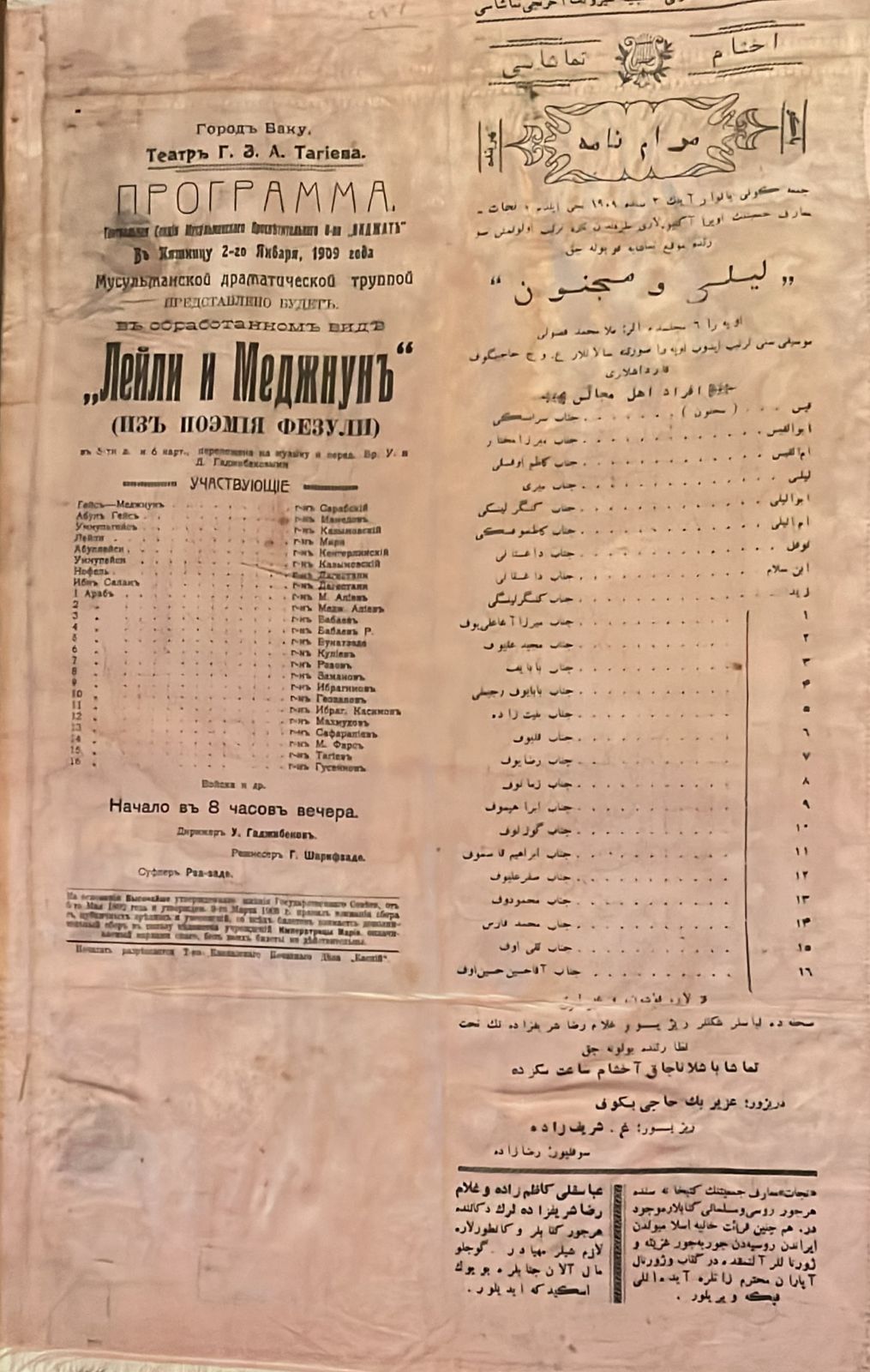 The legend of “Leyli and Majnun”, which glorifies the eternal theme in human history of sublime and undying love, has its roots deep in antiquity. The great master of art, Uzeyir Hajibeyli, composed the opera “Leyli and Majnun” in 1907 when he was just 22 years old. He was deeply impressed by the performance of “Majnun at Leyli’s grave” staged in his hometown Shusha at the end of the 19th century by Abdurrahimbey Hagverdiyev. In this performance, the role of Majnun was played by the already famous khanende Jabbar Garyagdy, while thirteen-year-old Uzeyir participated in the chorus of boys accompanying the singer. This event played an important role in the creation of the first Azerbaijani opera. The idea to write an opera using themes from Azerbaijani literature and musical motifs came to Hajibeyli while he was studying at a seminary in Gori. He was further inspired by the Italian opera “The Barber of Seville” by Rossini, which he saw in Tiflis. The libretto of the opera “Leyli and Majnun” was based on the eponymous poem by the great 16th-century poet Muhammad Fuzuli. This opera is considered the first national opera of Azerbaijan.
The great success of the first Azerbaijani opera among the people was described by Uzeyir Hajibeyli as follows: “In my opinion, this success can be explained by the fact that the Azerbaijani people were already expecting the appearance of Azerbaijani opera on their stage. In “Leyli and Majnun”, authentic folk music and a well-known classical plot came together. Since its first performance and to this day, this opera remains one of the most beloved works among Azerbaijani listeners. It is included in the permanent repertoire of the Azerbaijani State Academic Opera and Ballet Theater”.
The main reason Hajibeyli chose the poem by Fuzuli was because “Leyli and Majnun” by this author was written in the Azerbaijani language, and some parts of it had long been used by folk musicians in performing mughams. The composer took some gazelles from Fuzuli’s “Divan”. When writing the libretto, he significantly shortened the text of the poem and wrote some parts himself.
Thus, after “Leyli and Majnun”, a new stage opened in the history of musical culture in Azerbaijan, and at the same time the foundation of the opera genre in the Muslim East was laid.
The opera “Leyli and Majnun” marked the beginning of a fusion between modern musical techniques and the unique characteristics of national folk art. This opera is based on a rich folklore material, including mugham and lyrical compositions. As a result, the genre of mugham opera was created, combining musical notation with solo vocal improvisation. Mughams became the main musical material of the opera, replacing traditional opera forms such as arias, arioso, recitatives, and vocal ensembles (duets, trios, etc.). 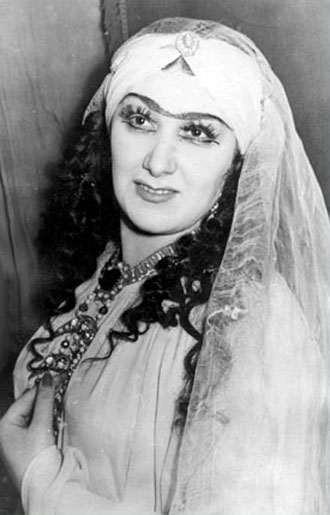 Mughams play a crucial role in depicting the characters and developing the musical dramaturgy as a whole. In “Leyli and Majnun”, the musical dramaturgy unfolds gradually in a lyrical-epic manner, stemming from the imagery and emotional content, as well as the development of intonation and compositional structure. Many of the opera’s scenes are constructed based on mugham. Hajibeyli did not notate the mughams. The singers, known as khanende, perform their vocal parts accompanied by a tar player. Uzeyir Hajibeyli took into consideration the traditional emotional power and the specific way mughams are perceived, which have evolved over centuries. For instance, in Act I, the joy and happiness of the mutual love between Leyli and Majnun are conveyed through the lyrical and bright mugham of Segah; the worry and anxiety of Majnun’s father about his son’s condition are expressed through the tense and emotional mugham of Chahargah. In the subsequent acts, the characters who realize the tragedy of their fate resonate with the mughams of Shur and Bayati-Shiraz, conveying sadness and suffering. To portray the character of the knight Nofel, U. Hajibeyli used the mugham “Zerbi Heyrati” with a march-like, courageous character. By selecting mughams in accordance with the development of the stage action, Uzeyir Hajibeyli revealed new expressive possibilities of these genres. Additionally, in “Leyli and Majnun”, melodies of classical Azerbaijani folk songs are also used to enhance the performance.
Utilizing elements of imitation polyphony characteristic of mugham performance, Hajibeyli created a vibrant symphonic piece – the interlude of the final act, based on the rhythmic mugham “Arazbari”.
On January 25, 1908, the first performance of the opera “Leyli and Majnun” took place at the Taghiyev’s Theatre. Initially, the work consisted of 5 acts and 6 scenes, but in subsequent productions, it was reduced to 4 acts and 6 scenes. The director of the first performance was Huseyn Arablinski, while the conductor was Abdurrahimbey Hagverdiyev (only for the premiere).
The character of Majnun was brought to life with great skill and talent by Huseyngulu Sarabski in the initial production, becoming an indispensable performer in this role for many years. However, the role of Leyli posed numerous challenges at stage. One of the main difficulties was finding an actress for the role, as according to Muslim traditions, women were prohibited from appearing on stage. After extensive search efforts, the organizers of the performance at least found the right person for this role. It was a chef’s apprentice Abdurrahim Farajov, who had a beautiful voice. He agreed to take on the role of Leyli, but on one condition – that no one would discover his true identity. He only played this role during the premiere, while in subsequent performances, it was successfully portrayed by A. Aghdamski (A. Badalbeyli).
However, later on, other outstanding performers in the role of Leyli and Majnun emerged, who won the hearts of the audience with their unique and touching performances. Certainly, after the end of the era of “male Leyli”, real Leyli – women – began to take the stage one after another. If we recall the entire history of “Leyli and Majnun” and think about the best performers of the main roles, two names always stand out: Majnun – Huseyngulu Sarabski, and Leyli – Rubaba Muradova.
Rubaba Muradova was a singer with a powerful, soulful voice with a wide range and had an original performing style. In the role of Leyli, she conveyed sincerity and sensitivity, giving the performance an indescribable emotional depth with her voice. During the Soviet period, Rubaba Muradova played the role of Leyli enchantingly and memorably, as if she herself experienced the tragedy of unhappy love and separation from her homeland. Despite the fears and prohibitions she faced in childhood and youth, she boldly portrayed the feelings of Leyli on stage. Rubaba Muradova played this role with great courage.
Uzeyir Hajibeyli, the premiere day, wrote about the challenges faced during the creation of this opera “Leyli and Majnun”. He mentioned: “We, the youth, worked on the opera “Leyli and Majnun” with great enthusiasm. We faced significant challenges both in terms of resources and skill level. At that time, we lacked a developed performing culture, proper theoretical training, and even our own stage. In Baku, oil industry workers from the charitable society “Nijat” presented themselves as enlighteners and patrons of the arts. Financial need forced me to sell the rights to the opera “Leyli and Majnun” to this society for a small sum, as funds were impossible to find and the profits were considerable”.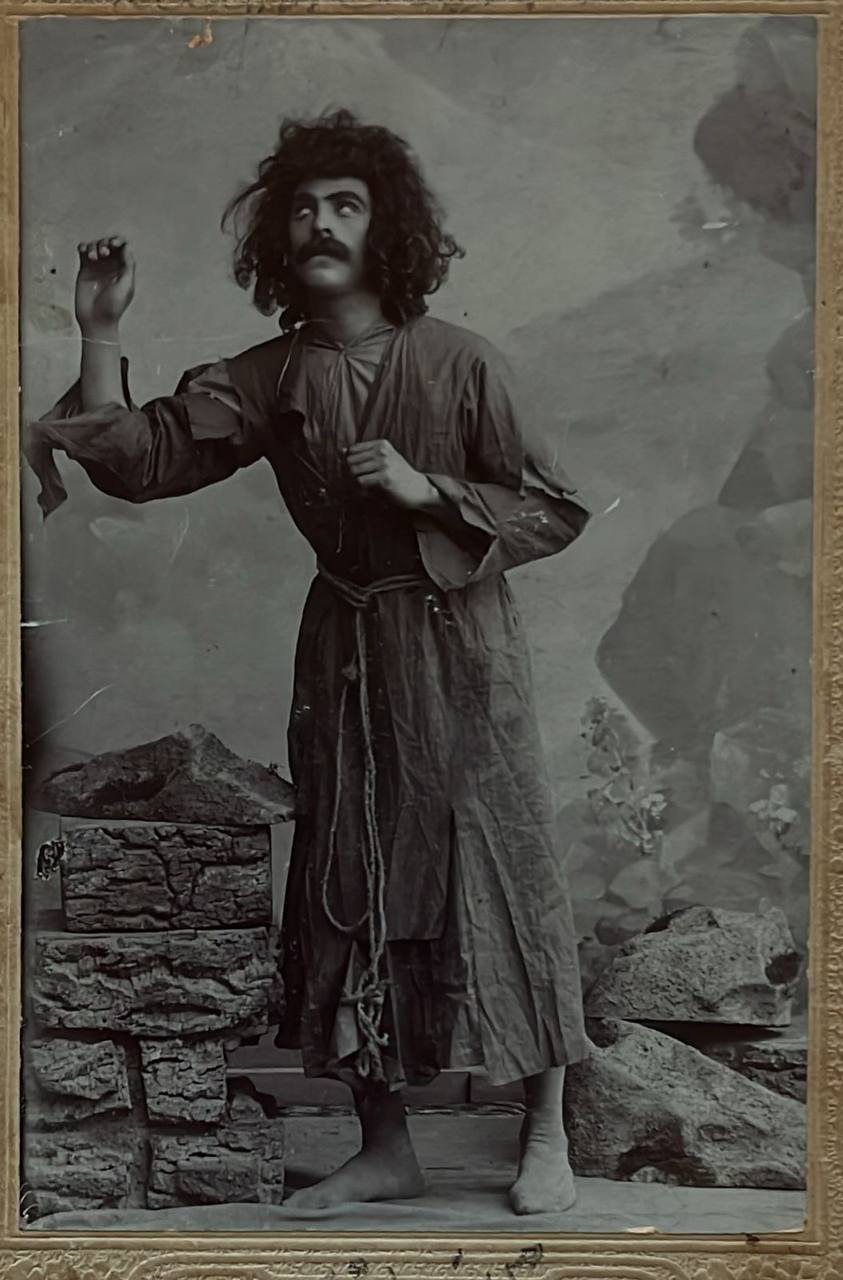
In the summer of 1913, the opera was staged in Shusha, the city where the composer grew up. The first performance of this opera outside of Azerbaijan took place in Tiflis. Even before the revolution, Azerbaijani actors performed the opera in various cities in the South Caucasus, as well as in Central Asia and Iran. The opera was later staged in Russia, Ukraine, Iran, Turkey, Georgia, Uzbekistan, and Turkmenistan.
Uzeyir Hajibeyli dedicated significant time and effort to perfecting and enhancing the opera, adding new musical fragments while managing to preserve its unique and fresh musical style. Inspired by U. Hajibeyli’s “Leyli and Majnun” in 1916-1917, the Iranian poet-democrat MirZadeh Ehsghi wrote the mugham opera “The Resurrection of the Persian Kings”. The opera “Leyli and Majnun” was frequently performed in the Caucasus, Central Asia, and Iran, playing a crucial role in shaping the professional musical culture of these people, a role it continues to fulfill to this day.
In the 1930s, Uzeyir Hajibeyli, responding to the demands of the time, prepared a new version of the opera and considered replacing the mugham episodes with traditional operatic forms. During this period, he composed “Majnun’s Aria” and incorporated it into the main character’s role. Following this, Hajibeyli composed the “Aria of Majnun’s father”. However, the composer later concluded that as the first work of national musical art, the opera “Leyli and Majnun” should remain a mugham opera.
In 1940, the opera “Leyli and Majnun”, also based on the same Arabian legend, was first performed. The music of this opera incorporated samples of folk music, including Uzbek maqams.
In 1996, the creative team of “Azerbaijantel Film”, under the direction of Shamil Najafzadeh and Nazim Abbasov, produced a two-part opera film titled “Leyli and Majnun”, based on the eponymous opera. The lead roles in the film were played by Umbulbanu Gulamova and Agil M. Guliyev. The film was showcased at the “Pure Dreams” festival in St. Petersburg in 2002, where director Shamil Najafzadeh was honored with the award for “Visual Design”.
In 2008, in accordance with a decree signed by the President of the Republic of Azerbaijan, the country celebrated the 100th anniversary of the first opera of the Muslim East. That same year, the 100th anniversary of the opera was also commemorated by UNESCO. As of 2009, the opera “Leyli and Majnun” had been performed on stages of various theaters over 20,000 times. November 23, 2008, a multimedia adaptation of the opera “Leyli and Majnun” was presented in Doha, the capital of Qatar, featuring the ensemble Yo-Yo Ma, which included both Western and Eastern musicians.
The following year, the opera “Leyli and Majnun” became part of the “Silk Road” project led by renowned cellist Yo-Yo Ma in several cities in the United States. The performances featured a blend of traditional Eastern and classical musical instruments.
On March 15, 2011, during the II International Mugham Festival, a new staging of the opera was presented at the Azerbaijan State Academic Opera and Ballet Theater. The production was directed by the People’s Artist of Azerbaijan, Rafiz Ismayilov. The role of Leyli was performed by the People’s Artist of Azerbaijan, Nazaket Teymurova, and the role of Majnun by the People’s Artist of Azerbaijan, Mansum Ibrahimov.
On November 10, 2012, the opera was staged for the first time in San Francisco. In this production, the role of Leyli was performed by Vusala Musayeva, and the role of Majnun by Ilkin Ahmadov. The performers were accompanied by an orchestra, including musicians playing the kamancha – Imamyar Hasanov, on the tar – Rufat Hasanov, as well as performers from China, India, South Korea, and the USA.
In 2013, with the support of the Ministry of Culture of the Republic of Azerbaijan, an opera film “Leyli and Majnun” based on the eponymous opera was released. The scriptwriter and director of the film was Mehdi Mammadov. The leading roles were played by the People’s Artists of Azerbaijan, Mansum Ibrahimov and Aygun Bayramova. The premiere of the film-opera took place on March 17, 2013, during the III International Mugham Festival at the Nizami Cinema in Baku. The premiere also featured French actor Gerard Depardieu and film producer Arno Frillen.