

Uzeyir Hajibeyli
Fikret Amirov. Uzeyir school
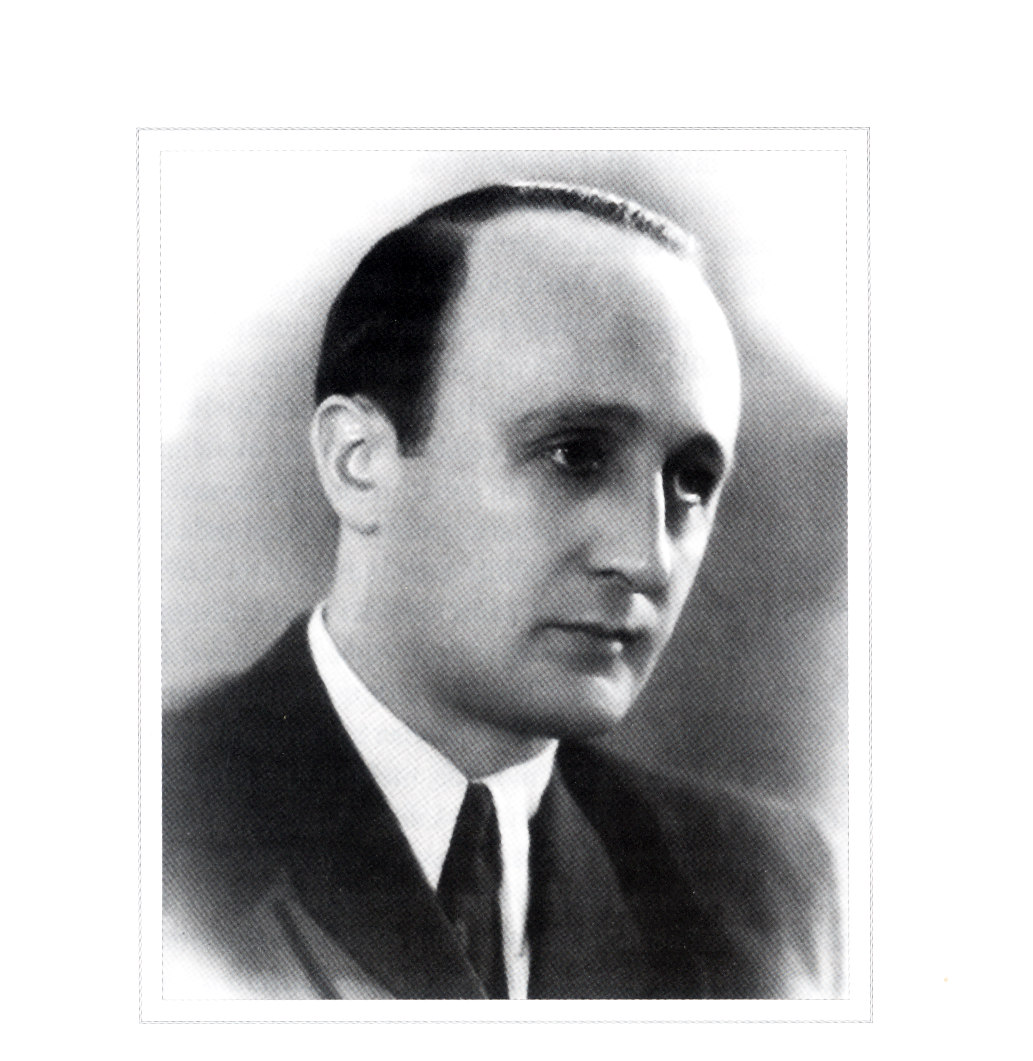
We once again revisit the life and creative path of our great national composer Uzeyir Hajibeyov, repeatedly recalling his words and writings. The true significance of commemorating such momentous events lies precisely in how relevant and necessary they remain for today. If we are to evaluate Uzeyir Hajibeyov’s legacy from this perspective, then the unparalleled impact of the great composer’s musical works, his thoughts on art, and his personality on the development of Azerbaijani music and Azerbaijani composers becomes vividly and unmistakably clear in all its grandeur.
First, I would like to say a few words about Uzeyir Hajibeyov’s personality. I consider it important to begin with this matter because, firstly, when I first met the composer, I was still a child and lacked sufficient knowledge about his art. Secondly, I believe that the artist’s personality should be foremost. A work is always a reflection distilled from the entire spiritual world of its author; the greatness, purity, nobility, overall dignity, and artistic power of the personality inevitably manifest in their creativity. It is impossible to imagine art and personality as separate entities. These two essential qualities must exist in unity. Only then can we truly speak of greatness and genius. Such a blessing was bestowed upon the great Uzeyir.
From the very first meeting, he remained in my mind as a kind, caring, and humble person. The unforgettable occasion of this meeting was made possible by our great singer Bulbul. In 1938, Bulbul took me to the conservatory and introduced me to the composer’s office, saying, "Mr. Uzeyir, he is the heir of Mashadi Jamil and wishes to become a composer".
Uzeyir received me with his characteristic calmness and a very warm attitude. From that day until the end of his life, I felt the passionate regard of the immortal artist. The fervor I first sensed in his personality gradually manifested itself in his art as well, and with all my being, I became attached to him. However, this attachment did not, by any means, restrict me as a composer; on the contrary, it strengthened my wings and gave me courage and freedom.
There is a bird called the golden eagle, known as the "berkut". It is said that when these berkuts teach their young to fly, they grasp them in their talons, lift them high up—very high—and then release them headfirst. Whichever eaglet has strong wings and enough courage spreads its wings, flies, and does not fall to its death. The berkuts inherit bravery and valor to their offspring, and for this reason, they seem to have no doubt that their young will successfully pass such a test.
In Uzeyir Hajibeyov’s attitude towards young people, I have sensed such calm determination and a familiar rigor. By the way, I should mention that there are those who call me a protégé of Uzeyir’s music. From my teacher Uzeyir, I have absorbed the purity of folk music. No matter how much I listen to Uzeyir’s music, it always feels as if I am hearing it for the first time. Each time, it appears new to me. As I have grown older, I have come to realize how fortunate I am to have had the privilege of being in the presence of this great artist and to have heard his unforgettable advice.
I have no doubt that my fellow artists would gladly echo these words. In such moments, I often recall a statement once made by Russian critics about the powerful influence of Gogol’s prose: "We have all emerged from Gogol’s "The Overcoat". To fully express what Uzeyir Hajibeyov’s art has contributed to Azerbaijani composers, I can only say this: "We have all emerged from the Uzeyir school".
What have we learned in this school?
This is a very serious and comprehensive question that demands a thorough answer. Here, I must limit myself to highlighting only certain aspects.
It is well known that Uzeyir Hajibeyov is the founder of Azerbaijani professional music. The creation of our first opera, operetta, folk instrumental orchestra, song and dance ensemble, and more, is all connected with his name.
The great artistic journey from "Leyli and Majnun" to "Koroghlu" is rich with intense creative exploration and valuable artistic discoveries. It is worth noting that the Azerbaijani opera was specifically composed based on Fuzuli’s poem "Leyli and Majnun", which is a meaningful fact. A profound love for Fuzuli’s poetry prevails throughout Uzeyir’s works. The composer’s fidelity to Fuzuli’s poetry is also clearly felt in his other compositions. I believe that the role fulfilled by Fuzuli, the founder of our literary language, in our literature has been realized in our music by the great Uzeyir. Samad Vurghun rightly addressed Uzeyir as "O brother composer of Fuzuli’s poetry!". We must always carefully preserve these fraternal traditions between poetry and music.
The work "Fundamentals of Azerbaijani Folk Music", which emerged as a result of many years of research, introduced Uzeyir Hajibeyov also as a powerful music theorist and researcher. The composer’s various articles and speeches dedicated to different issues of our music remain valuable sources for us today. His music complements the word, and the word complements his music. One of the most striking aspects of Uzeyir’s art is his attitude toward folk music. There is hardly any of his writings or speeches that does not touch upon this point. His great attention to this matter was not accidental. In the foreword to the first edition of "Fundamentals of Azerbaijani Folk Music", published in 1945, Uzeyir Hajibeyov explained how he approached this topic, stating that, "I began studying the fundamentals of Azerbaijani folk music in 1925. Since there was neither literature, nor specialized scientific works, nor any other sources on this subject, I was compelled to rely solely on my personal observations, the results of my meticulous research, and the deep analysis of all examples and forms of Azerbaijani folk music".
Thus, these lines clearly confirm how the immortal artist conducted intensive research to develop the scientific foundations of our folk music, to give it the high recognition it deserves, and to properly promote and endear it! When Uzeyir Hajibeyov repeatedly emphasized the importance of collecting our musical folklore and thoroughly studying folk music, he did not mean passive use or indiscriminate citation of this rich treasury. The composer’s firm conviction was that musical folklore should be studied to learn the people’s desires and thoughts, their worldview, and artistic secrets, and that this knowledge should be creatively utilized. Otherwise, the composer would be unable to add anything new to folk music and would merely repeat what already exists, which, of course, has no connection to true artistry.
Fortunately, the great Uzeyir also set an example in this matter within Azerbaijani music. His brilliant creation "Koroghlu" emerged as a result. I consider "Koroghlu" to be a major artistic work that can stand alongside classic Russian operas such as Glinka’s "Ruslan and Lyudmila" and Borodin’s "Prince Igor". The author, describing how this work came into being, wrote: "The practical significance of my work in studying the foundations of Azerbaijani folk music, as a composer, was that I wrote the opera "Koroghlu".
This is a very valuable acknowledgment. Indeed, "Koroghlu" is a source of great artistic significance for us. This opera has not yet been studied and researched with the necessary depth. However, in terms of extensively and thoroughly exploring the relationship between Uzeyir’s artistic legacy and his theoretical heritage, a deep and well-informed analysis of "Koroghlu" is essential.
When composing the opera, U. Hajibeyov, as he himself stated, adhered to the strict rules and principles that form the foundation of Azerbaijani folk music art; these "rules and principles" not only did not stifle the composer’s creative imagination but rather served as a foundation that further empowered it, illuminating the broader horizons of free creative fantasy.
The great Russian critic V. G. Belinsky, when discussing the works of the genius A. S. Pushkin—such as "The Bronze Horseman", "Eugene Onegin", and others of similar nature—particularly emphasized their profound national spirit, considering them even more folk-oriented than works whose subjects were directly drawn from folklore, like "Ruslan and Lyudmila". As N. V. Gogol put it: "True nationality lies not in depicting the sarafan, but in representing the spirit of the people".
These reflections can likewise be fully applied to the works of Uzeyir Hajibeyov. The deeply national and folk-oriented character of "Koroghlu" cannot be explained merely by the fact that its subject was drawn from folklore. The opera embodies the unparalleled spirit of resistance, heroic valor, and patriotic pride of a people who have produced such figures as Babek and Koroghlu in their bloody struggles against foreign invaders for freedom. Hajibeyov’s genius lies in his ability to express all these essential qualities in a musical language that resonates deeply with the spirit of the people and feels inherently native to them. Undertaking such a difficult and at the same time honorable creative task, the composer was justified in declaring, after the opera’s first great success: "Despite its free structure and the complexity of its musical texture, "Koroghlu" opera reaches Azerbaijani audiences more effectively than some works that merely reproduce Azerbaijani folk songs and melodies, because "Koroghlu" was written in the authentic musical language of the people. I did not borrow ready-made songs from the people—I only studied the foundations of folk creativity".
Our great teacher believed that those who lack the ability to speak to the people in a language they understand will not be able to create works of high value worthy of our time.
Naturally, Hajibeyov did not arrive at such a conviction all at once. First, he had tirelessly collected, studied, and analyzed Azerbaijani folk music for many years, drawing important scientific conclusions. Second, he had consistently followed the creative paths of the most prominent composers of Russia and other nations, arriving at relevant conclusions. Uzeyir Hajibeyov persistently sought to understand the artistic mastery of world-renowned composers and the reasons behind their great success, studying them in depth. Whenever appropriate, he considered it essential to touch upon this issue in his articles and speeches. In this regard, his article "Tchaikovsky and Azerbaijani Music" is particularly interesting. In one part of the article, we read: "The basis of the great Russian composer’s musical creativity lies in Russian folk music, which is why all his works, in the full brilliance of his free creative imagination, are native and dear to the Russian people. As a purely national Russian composer, Tchaikovsky is at the same time completely free from any ethnographism or national narrowness. I am one of those who passionately admire Tchaikovsky’s work. I have adopted from Tchaikovsky the principle of developing my free creative imagination on the unshakable foundation of the folk musical language".
Uzeyir Hajibeyov approached not only the classical representatives of Russian music but also its contemporary figures with great affection, analyzed their works with admiration, and, when necessary, defended them against unjust attacks. This, in turn, confirms that Uzeyir Hajibeyov was an influential figure on an All-Union scale.
Today, the immortal composer Uzeyir bey, whom we all know from school, called upon us to learn the best aspects of the musical cultures of other peoples and to benefit from them. "Let us learn from each other!" Hajibeyov did not hesitate to repeat this call frequently. He even authored a separate article under this very title.
Uzeyir Hajibeyov did not limit himself to calling for learning from others; he also considered it essential that we properly recognize and understand "ourselves". In this regard, his reflections on Western scholars’ research on Eastern music are particularly insightful. After making a series of factual comparisons, the author concludes that European scholars know ancient Eastern music and musicologists better than we do and are more promptly aware of such history (‘Interpretation of Eastern Music by Western Scholars"). This judgment, made in the 1920s, also carries an element of self-reproach. Such delicate yet incisive statements aimed to mobilize us and encourage a deeper study of Eastern classical music.
Within Uzeyir Hajibeyov’s scientific and theoretical legacy, there are valuable reflections on the collection and processing of our folk songs, the proper appreciation of the ashiq art, performance, and other important creative issues. The great artist, who was always eager to learn and constantly encouraged us to learn as well, has a scientific, literary, and artistic heritage that is particularly significant for the development of music in the Near East and Arab countries. The widespread fame of the composer’s works, especially "Arshin Mal Alan", both abroad and in the Near East, should be explained precisely by this fact.
In a famous legend, Antaeus’s extraordinary strength is attributed to his feet being firmly rooted in the earth, his connection to the soil. Uzeyir Hajibeyov himself loved this comparison and saw the composer’s power and strength in his attachment to the life and art of the people. We still have much to learn from the great legacy of Uzeyir about the secrets of this Antaean strength.