

Uzeyir Hajibeyli
Heydar Aliyev
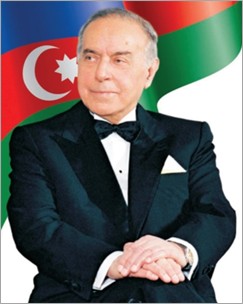
Speech by the President of the Republic of Azerbaijan Heydar Aliyev at the jubilee evening dedicated to the 110th anniversary of the birth of the great composer Uzeyir Hajibeyov
The Republican Palace, September 18, 1995
Ladies and gentlemen!
Dear sisters and brothers!
I sincerely congratulate you on the 110th anniversary of Uzeyir Hajibeyov, a national holiday, a holiday of culture and music of Azerbaijan.
With his extraordinary talent, perfect education, intellect, patriotism and socio-political activity, Uzeyir Hajibeyov was one of the most prominent persons of our people. He was a prominent figure who stood among the leading luminaries of the world and represented Azerbaijan with distinction.
Born in Agjabedi, one of the beautiful places of Azerbaijan, received his initial education in Shusha, felt the influence of the sacred atmosphere of Shusha, the world of Natavan, the artistry and ideas of musicologist Mir Mohsun Navvab, and later pursued higher education at the Gori Seminary and graduated from the conservatory of Saint Petersburg, Uzeyir Hajibeyov lived a glorious life and held an eminent place in the history of Azerbaijan. Being very talented in his childhood Uzeyir Hajibeyov learned our history, the history of our culture, our music.
Combining all of these elements and drawing upon the rich musical heritage of the Azerbaijani people, he composed the opera "Leyli and Majnun" at the age of 22 and presented it to the world, thereby establishing himself as a great composer and beginning his career.
The history of opera in Azerbaijan starts with "Leyli and Majnun". The theatre in Azerbaijan founded by Mirza Fatali Akhundov, has a great and rich history. The founder of the Azerbaijani opera was Uzeyir Hajibeyov. Thanks to his inexhausting activity, the art of opera and ballet developed in Azerbaijan, we have our theatre of opera and ballet today.
Later Uzeyir Hajibeyov wrote nice and valuable musicals, gained his fame thanks to his operettas "Arshin mal alan", "O olmasin, bu olsun". He dedicated the rest of his activity to the development of the Azerbaijani music and culture. Uzeyir Hajibeyov made his first step with "Leyli and Majnun". Based on the poem of the great Muhammad Fuzuli and utilizing his works, as well as drawing upon our people’s mugham music, folklore, folk music, and songs, he transcribed Azerbaijan’s rich musical heritage—passed down through the centuries—into notation for the first time, arranged its performance with a large symphonic orchestra, and personally conducted it. Furthermore, he facilitated its performance by a large symphonic orchestra, personally assuming the role of conductor and artistic director.
The history of Azerbaijan is rich in culture, science, literature, architecture. We have great men-of-letters like Nizami, Khagani, Fuzuli, Nasimi, Vagif and others. The Azerbaijani people has an ancient architecture and painting, it made great contributions to the treasury of the world civilization.
One of them is famous Uzeyir Hajibeyov, who wrote the musical compositions which became popular world-wide; he systematized the Azerbaijani music and introduced it to the world. As a writer, publicist, scientist, teacher, philosopher and social figure, Uzeyir Hajibeyov dedicated his entire life to the development of our culture and music, to the education of our people. He was a writer, publicist, scholar, educator, philosopher, and socio-political figure who actively participated in state affairs.
After the establishment of the first democratic republic in Azerbaijan in 1918, Uzeyir Hajibeyov took an active part in the socio-political processes then. As a prominent figure, he influenced the ongoing processes and made efforts to raise the self-identity of the nation. He worked and acted for the development of the Azerbaijani Democratic Republic and its territorial integrity. His recommendations and advices to the Azerbaijani delegation (his younger brother Jeyhun Hajibeyov was also a member of that delegation) going to the Versailles conference, prove it. Hajibeyov served as editor-in-chief for the newspaper "Azerbaijan", the main government newspaper of the Democratic Republic of Azerbaijan. He made significant contributions to the work of this newspaper both through his own articles and his leadership.
Later he always participated actively in the public life of Azerbaijan. He undertook prominent initiatives and implemented substantial measures aimed at eradicating illiteracy, elevating the cultural standards of the people, and advancing cultural development. The founding of music schools and higher music education in Azerbaijan, along with the extensive advancement of the arts and culture, are intrinsically linked to the contributions of Uzeyir Hajibeyov.
Uzeyir Hajibeyov contributed to the birth of a number of composers in Azerbaijan. I can say that he was the first composer in the history of Azerbaijan. All subsequent Azerbaijani composers were directly his students, and later generations were educated and nurtured under the influence of his works and creativity, embracing the art of composition and creating new musical pieces. The works by Uzeyir Hajibeyov are important from musical, as well as socio-political and moral point of view. Freedom of man, moral purity, sincerity, kind relations among people are praised in his compositions, such as "Arshin mal alan", "Meshedi Ibad", and finally, Uzeyir Hajibeyov’s masterpiece "Koroghlu". One of the main features in the creative activity of Uzeyir Hajibeyov is that he created and invented the themes of all his works, including his musical works himself. The themes he carefully selected, with due consideration to their significance and content, along with the musical and dramatic compositions he developed based on these themes, are by no means coincidental. The opera "Leyli and Majnun" was not created by chance. The humanistic and benevolent sentiments, the ideas of freedom, and the pure, sincere love between individuals expressed in the poem written by our great poet Muhammad Fuzuli in the legend of "Leyli and Majnun" captivated and deeply interested Uzeyir Hajibeyov to such an extent that he turned to Fuzuli’s works for his first composition, selecting this very theme and creating an immortal masterpiece based upon it. It has been staged for 87 years; we are sure that it will live for centuries.
In his operettas "Arshin Mal Alan" and "O Olmasin, Bu Olsun" Uzeyir Hajibeyov’s intention was not merely to please audiences with beautiful music or to entertain and amuse them through the characters of his works, but rather to serve deeper, more meaningful purposes. His objective was to criticize and expose the negative aspects present in the life of our people—such as inertia, ignorance, and various customs that hindered their progress—through the most effective medium: music. He sought to awaken the public, propel them forward, and elevate the culture and moral values of the nation. Undoubtedly, the music influenced the people more than anything.
By the way, I want to express my opinion. Every work of art influences people and, undoubtedly, exerts a positive impact. They have a significant influence on the formation and development of individuals’ characters, as well as on the enhancement of their cultural level. Nevertheless, the influence exerted by a musical composition exceeds that of all other types of artistic works. Taking into account that at the dawn of the century the vast majority of our people were illiterate, unable to read, with scarce availability of books and without access to cinema, television, or other mass media, it is clear how significant Uzeyir Hajibeyov’s contributions were to the moral and cultural advancement of our nation. Through his operas, including "Arshin Mal Alan", "O Olmasin, Bu Olsun" and others, he successfully transmitted the words of Muhammad Fuzuli and his own ideas to the people via the medium of music.
As mentioned earlier, Uzeyir Hajibeyov consistently exalted individual liberty and the freedom of nations throughout his oeuvre, standing in defiance of despotism, oppression, and authoritarian rule. The use of the great epos "Koroghlu" by the composer was a great event in the history and culture of Azerbaijan. The epos of "Koroghlu" has passed the centuries up to now. It always called the people to heroism and bravery. This epic has inspired a profound sense of heroism, courage, and patriotism among the people. The "Koroghlu" epic has consistently inspired people to fight for freedom and to stand against tyranny. It has been deeply cherished because it encapsulates the most vital aspirations and ideals related to the people’s lives and their future. Uzeyir Hajibeyov’s composition of the opera "Koroghlu"—intended not only to present this epic to our people, but also to introduce it to the international community in a more compelling and impactful manner—stands, once again, as a groundbreaking event in the history of Azerbaijani culture.
Uzeyir Hajibeyov continues to be acknowledged as a prominent figure in Azerbaijani cultural history — a composer, musician, publicist, and scholar of exceptional stature. When celebrating his anniversaries, we always illuminated these features of his activity.
With great pleasure I want to say that I was one of the organizers of the anniversaries of Uzeyir Hajibeyov. He is never forgotten by our people. He was loved in his life and even after his passing, he has remained a beloved and revered figure for our people. Our people always loved him, benefited from his works. Thus, we celebrate his birthday every year.
I recall the grand celebrations held in honor of Uzeyir Hajibeyov’s 90th and 100th anniversaries. In 1975, we organized the 90th anniversary celebration of Uzeyir Hajibeyov, which was commemorated with great solemnity not only in Azerbaijan but also in the Soviet Union’s capital, other republics within its scope, and internationally. In Azerbaijan, and specifically in Baku, Uzeyir Hajibeyov’s residence was the first home of a cultural figure to be transformed into a house museum. The Uzeyir Hajibeyov House Museum was inaugurated in 1975, twenty years ago. We are all deeply pleased that this museum has been serving the development and advancement of Azerbaijani culture and people for two decades. Since its establishment, the museum has been under the leadership of Uzeyir Hajibeyov’s close associate, Ramazan Khalilov. In recognition of his significant contributions, I signed a decree awarding him Azerbaijan’s prestigious "Shohrat" Order.
Ramazan Khalilov is a very fortunate individual. At the age of 95, he remains active to this day. Having worked shoulder to shoulder with Uzeyir Hajibeyov, he is a living testament to his legacy for us. Therefore, he is dear to us, and it is a source of great happiness that he is still alive. I am confident that we will also celebrate his 100th birthday.
In 1985, the centennial anniversary of Uzeyir Hajibeyov was commemorated with great pomp and circumstance both in Azerbaijan and in Moscow, then the capital of the Soviet Union. The celebration took place in the Column Hall, one of Moscow’s largest auditoriums, where delegates from all Soviet republics were in attendance and delivered addresses. Eminent Russian composers shared their recollections of Hajibeyov, and as we listened and bore witness to these testimonies, we were filled with profound pride.
Ultimately, today we commemorate the 110th anniversary of Uzeyir Hajibeyov. I take great satisfaction in having had the privilege to both oversee and coordinate the commemorative events for his 90th and 100th anniversaries, as well as this present 110th celebration.
The scholarly works dedicated to Uzeyir Hajibeyov, particularly the speeches delivered during his anniversary celebrations, predominantly emphasize his contributions within the musical domain. It is therefore unsurprising that these events have consistently featured addresses by musicologists, composers, and performers. Notably, it may be the first occasion where the President of the Republic has spoken at such a jubilee, a fact that underscores the exceptional stature of Hajibeyov. This is far from coincidental, as Uzeyir Hajibeyov was not only a visionary composer and musician but also an eminent scholar, philosopher, and educator. His oeuvre and direct involvement have been instrumental in fostering the national revival, awakening, and self-awareness among our people. Inspired by Hajibeyov’s works, Azerbaijani youth and citizens have deepened their love for the homeland; through engagement with his music and the ideas embodied therein, they have internalized the profound significance of nation, country, and homeland to every individual.
Uzeyir Hajibeyov was a great citizen. I would like to emphasize once again that during the difficult years of 1918–1920 — the period of Azerbaijan’s first independent republic — his creative work was of inestimable value. Moreover, his contributions in the years that followed remained exceptionally significant and irreplaceable.
If we look at history, Uzeyir Hajibeyov lived through three distinct political regimes. He was born and emerged as a cultural figure during the period of Tsarist Russian rule in Azerbaijan. This was followed by the establishment of the first Democratic Republic of Azerbaijan in 1918, which lasted for nearly two years. Subsequently, Soviet rule was established in Azerbaijan and continued until 1991–1992. Throughout these three historical phases—regardless of the nature or form of the ruling power—Uzeyir Hajibeyov remained steadfast in his service to the people. It is fair to assert that he believed deeply in the idea that, irrespective of the prevailing government, a person committed to the advancement of the nation must serve the people with loyalty and dedication, without compromise. This was precisely the path Hajibeyov chose. In earlier times, when discussions arose about Uzeyir Hajibeyov’s life, they mostly centered on his artistic works, while little to nothing was said about his socio-political activity from the early 20th century until 1920. It was sometimes whispered that he had been a member of the "Musavat" government and so on, but these facts were deliberately concealed. After 1920 and until his death in 1948, Hajibeyov lived under Soviet rule. His contributions during the Soviet period, like those of the preceding era, were remarkably fruitful, productive, and of great value and significance to our nation.
Today, in the context of the changing socio-political system of our republic, it is neither necessary nor appropriate to revert to past tendencies of highlighting one historical period while obscuring another. From his birth in 1885 until his death in 1948, Uzeyir Hajibeyov remained an eminent figure of the Azerbaijani nation. He rendered invaluable service to his people and, regardless of the prevailing political system or ruling authority, consistently utilized every available opportunity to advance the interests and cultural development of his nation.
While acknowledging Uzeyir Hajibeyov’s contributions prior to 1920, it is equally important to recognize and highly value his work in the subsequent period. In the flourishing of Azerbaijani culture — and today we can state with great pride that, indeed, from the 1920s onward, culture in our republic has developed and thrived, a robust cultural sphere has emerged, our people have become more educated, and their cultural consciousness has risen — Uzeyir Hajibeyov played an irreplaceable role in all of these achievements.
In 1937, Uzeyir Hajibeyov presented his opera "Koroghlu" to the world. This event represented a truly revolutionary milestone in the cultural history of the Azerbaijani people. Through "Koroghlu", Azerbaijani culture reached Moscow — then the capital of the Soviet Union. At that time, the USSR was a vast and powerful state, and Hajibeyov was received with great respect and admiration in the Kremlin Palace, located in the historical heart of Russia’s capital. It is particularly symbolic that the same Uzeyir Hajibeyov who once studied as a conservatory student in St. Petersburg was, in 1937, honored at the highest level in the Kremlin — the former palace of the Russian tsars. These events constitute an important part of our history, and none of them should ever be forgotten.
During the Great Patriotic War (1941–1945), Uzeyir Hajibeyov composed beautiful works — marches and songs — to raise the patriotic spirit of our people, contributed to the victory over fascism, and even purchased an airplane with his own funds and sent it to the front. This is none other than Uzeyir Hajibeyov himself.
Uzeyir Hajibeyov participated in Azerbaijan’s socio-political life at the beginning of the century, during 1918–1920, and from 1920 until 1948. He was a member of the Azerbaijani Parliament as well as the Soviet Union Parliament—the Soviet Union being a major state at the time, with its own parliament, regardless of one’s assessment of these bodies—and he considered holding these positions a great honor. This must not be forgotten. Uzeyir Hajibeyov belongs to us; among his greatest contributions was composing the first anthem of the independent Azerbaijan Republic. That anthem was later replaced. In 1945, a new anthem for the Azerbaijan Soviet Socialist Republic was created, also by Uzeyir Hajibeyov. Finally, after Azerbaijan regained independence, we restored the State Anthem created by Uzeyir Hajibeyov in 1919, which is deeply beloved by all of us. All of these are parts of Azerbaijan’s history and represent different stages in the life and creative work of Uzeyir Hajibeyov.
Every day of Uzeyir Hajibeyov’s life holds great value for us. Every work he composed, every sheet of music he wrote, is precious to us. Uzeyir Hajibeyov’s socio-political activities from beginning to end hold great significance for us. All these contributions have served the revival of the Azerbaijani people, the development of their culture, and the self-awareness of our nation. These services can never be forgotten. They are irreplaceable.
For all these reasons, Uzeyir Hajibeyov’s creative legacy is a national treasure of the Azerbaijani people. The personality of Uzeyir Hajibeyov is a source of pride for the Azerbaijani nation, our national pride.
Uzeyir Hajibeyov spent his youth in Shusha—a city that holds deep symbolic and spiritual significance for every Azerbaijani. Throughout his life, Hajibeyov remained steadfast in his commitment to the territorial integrity of Azerbaijan. When one reads his articles written between 1918 and 1920, it becomes evident how remarkably relevant his words remain even today. The geopolitical challenges of that period have reemerged in the present day. Armenia’s aggression against Azerbaijan, its attempts to seize our lands, and the patriotic resistance of our people—these were realities then, just as they are now. Uzeyir Hajibeyov dedicated his efforts to this cause at the time, and regrettably, history has repeated itself in our era. Today, as a nation, we strive to preserve and protect the independence and territorial integrity of Azerbaijan by following the path paved by individuals like Uzeyir Hajibeyov.
In Shusha, the hometown of Uzeyir Hajibeyov – although the whole of Azerbaijan is his homeland, he spent his youth in Shusha – a house-museum was established. Some of those present here have probably visited that museum. I have visited it many times myself. A statue of Uzeyir Hajibeyov was erected in Shusha. Not only his statue, but also those of our great artist Bulbul and the prominent figure Natavan were installed there. There were other statues as well.
In May 1992, Shusha was occupied by Armenia. The occupiers destroyed many things, including the monuments of our culture. They not only destroyed the statues of Uzeyir Hajibeyov, Bulbul, and Natavan, but also demonstrated such barbarity that they even fired bullets at those statues. It was a great achievement that the statues were rescued from captivity, brought to Azerbaijan via Georgia, and are now exhibited at the Museum of Art. Visitors to the museum can see how many bullets from automatic rifles and guns were fired at Uzeyir Hajibeyov’s statue. These are painful and distressing events for us. However, this is the truth, and this truth shows the extent of barbarity that can exist. There is no limit to fascism and brutality. The actions of the Armenian occupiers clearly prove this.
But let the Armenian occupiers not think that those bullets can undermine the legacy of Uzeyir Hajibeyov, Bulbul, or Natavan – no! Let them not think that those bullets can shake the spiritual strength of the Azerbaijani people – no! Let them not assume that the occupation of Shusha can be permanent – no! It cannot be!
Today, as we celebrate the 110th anniversary of Uzeyir Hajibeyov, we express our confidence that his legacy will live on and that all the places where he lived will become sites of pilgrimage. We are confident that the lands of Azerbaijan will be liberated from Armenian occupation. We are confident that all of Karabakh, all of our occupied lands, will be freed, and that independent Azerbaijan will have full control over all its territories and borders.
There is strong justification for this. For sixteen months, a ceasefire regime has been in place in the war between Armenia and Azerbaijan. Through this means, we strive to liberate our lands and ensure our territorial integrity by peaceful means. The measures taken, the activities of international organizations, our work within these organizations, and the consistent policies we pursue serve as evidence of this.
The major powers of the world are also striving for a peaceful resolution of this issue, and international organizations are operating within the framework of the Minsk Group. I am confident that they will continue to intensify their efforts. No state should endorse occupation. No state should endorse separatism. No state should endorse aggression. If this is the case, if there is justice and fairness, and if international norms continue to prevail in the world, then it means that our cause is just, and we will achieve the resolution of these issues through the path of justice and peace.
At the same time, just as Uzeyir Hajibeyov’s creativity has always called people to patriotism, it continues to invite the citizens of Azerbaijan to patriotism today. If we commemorate Uzeyir Hajibeyov’s memory today and once again highly appreciate his creative work, we must further cultivate and develop the patriotic feelings, which are the highest expression of his creativity. We must prepare ourselves for the future with these sentiments.
We must be the masters of our own lands. Issues must be resolved through peaceful means. At any cost, by any means, Shusha, Karabakh, and all our occupied territories will be liberated; they will be liberated by the will of the Azerbaijani people, by the courage of Azerbaijan’s heroic sons, and the territorial integrity of Azerbaijan will be ensured.
With these wishes and thoughts, I wish you and all the people of Azerbaijan a happy life and success. I bow before the memory of the great Uzeyir Hajibeyov. Today, the entire Azerbaijani people bow before his memory. Honoring and respecting his legacy, I once again call upon our people to unity. I call upon our people once again to courage and heroism. For the preservation of Uzeyir Hajibeyov’s legacy, for the survival of our culture and spirituality, I invite you all to courage, heroism, and patriotism. Thank you!