

Uzeyir Hajibeyli
Said Rustamov. Great composer
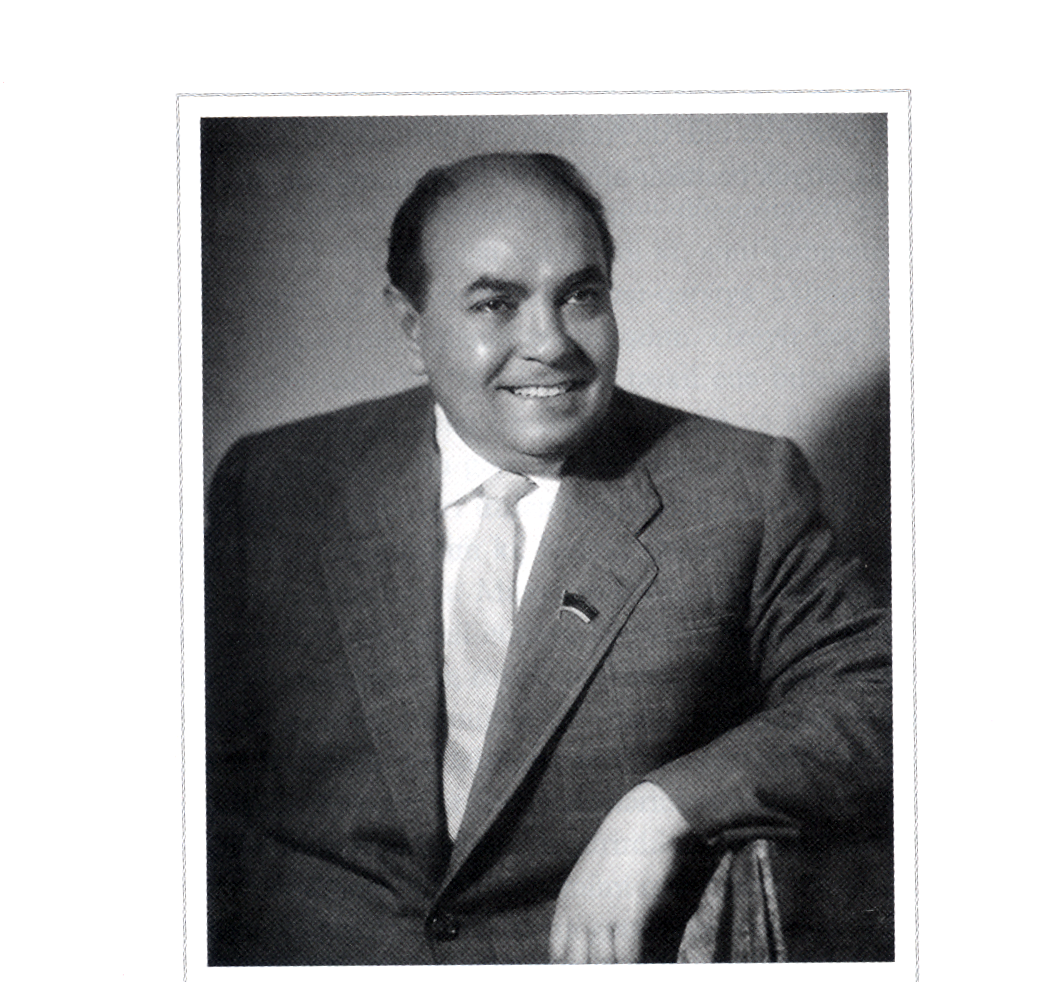
The great composer Uzeyir Hajibeyov left a legacy that enriched the musical heritage of the Azerbaijani people and Soviet musical culture. No aspect of modern Azerbaijani musical culture can be found that is not linked to the name of Uzeyir Hajibeyov. As the founder of professional Azerbaijani music, Uzeyir Hajibeyov was also the first direct organizer and leader of musical groups that had not existed in Azerbaijan before the establishment of Soviet power.
With the establishment of Soviet power in Azerbaijan, significant progress commenced in the lives of our people, impacting all sectors of the economy and culture. During the early years of Soviet rule, the first Azerbaijani music college was founded in Baku. Uzeyir Hajibeyov served as the organizer and director of this institution, where numerous performing musicians and composers began their musical education.
Azerbaijanis, who until then had no understanding of what music school and music education entailed, began to flock to this institution. I was also admitted to this school in February 1924.
On May 22, 1925, the Azerbaijan State Opera Theater hosted the first creative report night of the music college. During this event, the musical comedy "Arshin Mal Alan" was performed with the accompaniment of the first Azerbaijani symphonic orchestra, composed of the school's students. The orchestra's conductor was Uzeyir Hajibeyov. Among the members of the orchestra were Asaf Zeynalli, Afrasiyab Badalbeyli, Ashraf Hasanov, Mir Jabbar Miryahyayev (who later became a writer), Fuad Afandiyev (who would later gain fame as a renowned surgeon), Ismayil Akhundov (who later became a People's Artist of the Republic), and others. I also played the tar with musical notation in that orchestra. The performance was a tremendous success and turned into a celebration of national culture.
Everyone applauded and congratulated Uzeyir Muallim on this new victory of Azerbaijani culture. Their hearts were filled with joy, their eyes brimming with tears of joy, and they were filled with gratitude to our government and our beloved teacher and composer, Uzeyir Hajibeyov, who created this wonderful environment.
In 1926, the first higher music school in Azerbaijan, the State Conservatory, was established based on the music college. Uzeyir Bey was appointed as the rector of the conservatory and, throughout his life, alongside his creative work, he directly oversaw the training of highly qualified music professionals in Azerbaijan.
Uzeyir Bey previously taught music notation for tar and harmony at the music college and later at the conservatory. I learned to play the tar by note and studied harmony in Uzeyir Bey's class. In 1931, Asaf Zeynalli, Fuad Afandiyev, Ashraf Hasanov, and I, under the direct guidance and editorial oversight of Uzeyir Hajibeyov, wrote and published the first music textbook in the Azerbaijani language, "Elementary Notation Literacy." Back then, Uzeyir Bey would talk to us in class about the "fascinating" structural patterns of Azerbaijani mugham, sharing his creative observations on the subject and providing examples. These "conversations" gradually evolved into what we now know as an independent music discipline called "Fundamentals of Azerbaijani Folk Music."
Asaf Zeynalli's romance "My Country" is a product of the discussions about mugham during those years in Uzeyir Bey's classroom.
In 1926-27, Uzeyir Hajibeyov gathered students from the conservatory to form the first “polyphonic” Azerbaijani choir, consisting of 80 members. The choir's repertoire included folk songs, original compositions, and songs from brotherly nations. This ensemble performed in cultural palaces and occasionally at official public gatherings, gradually introducing Azerbaijani audiences to polyphonic choir works and gaining widespread appreciation.
At the first Azerbaijani music college, with the initiative of Uzeyir Hajibeyov, classes were established not only for European instruments but also for Azerbaijani folk musical instruments such as the tar and kamancha, as well as for khanandas. In addition to studying mugham and folk music creativity with Azerbaijani folk instruments, the curriculum also included instruction on playing these instruments using musical notation. Later, in 1931, thanks to students' efforts in these classes, the "First Note Azerbaijani Folk Instrument Orchestra" was established at the Azerbaijan Radio Committee under the leadership of Uzeyir Hajibeyov. Through this orchestra, Uzeyir Bey aimed to introduce the wider audience to noteworthy examples of the musical culture of other nations, particularly that of the Russian people, and gradually foster an interest in more sophisticated and complex musical works among listeners. As a result, the repertoire of the folk instrument orchestra included not only Azerbaijani music but also gradually incorporated works from Russian classical composers such as Glinka, Tchaikovsky, Cui, Ippolitov-Ivanov, as well as compositions by composers from fraternal nations like Spendiarov, Paliashvili, Soviet composers such as Dunayevsky, Novikov, Solovyov-Sedoy, Knipper, Glière, and Western European classics like Gounod, Verdi, Schubert, Mozart, Bizet, Brahms, and others.
In 1938, during the Ten-Day Festival of Azerbaijani Art held in Moscow, the operetta "Arshin Mal Alan" was performed with the accompaniment of the folk instrument orchestra, receiving high praise from the Moscow audience. Subsequently, this orchestra successfully participated in various events over the years, including the Transcaucasian Music Springs, plenary sessions of the Azerbaijani and USSR Composers' Unions, and tours to fraternal republics, effectively presenting the works of young Azerbaijani composers to a wider audience. This collective stands as one of the most valuable legacies of Uzeyir Hajibeyov.
Azerbaijani music now stands at the forefront of Soviet musical culture. The works of Azerbaijani composers have gained recognition beyond our homeland.
Azerbaijani composers and musicians recognize the unparalleled contributions of our great composer, Uzeyir Hajibeyov, in the successes achieved across all areas of our musical culture. They hold his cherished memory with profound respect and deep affection.