

Uzeyir Hajibeyli
G.Sharoyev, D.Kh. Danilov. Founder of the Azerbaijan Conservatory
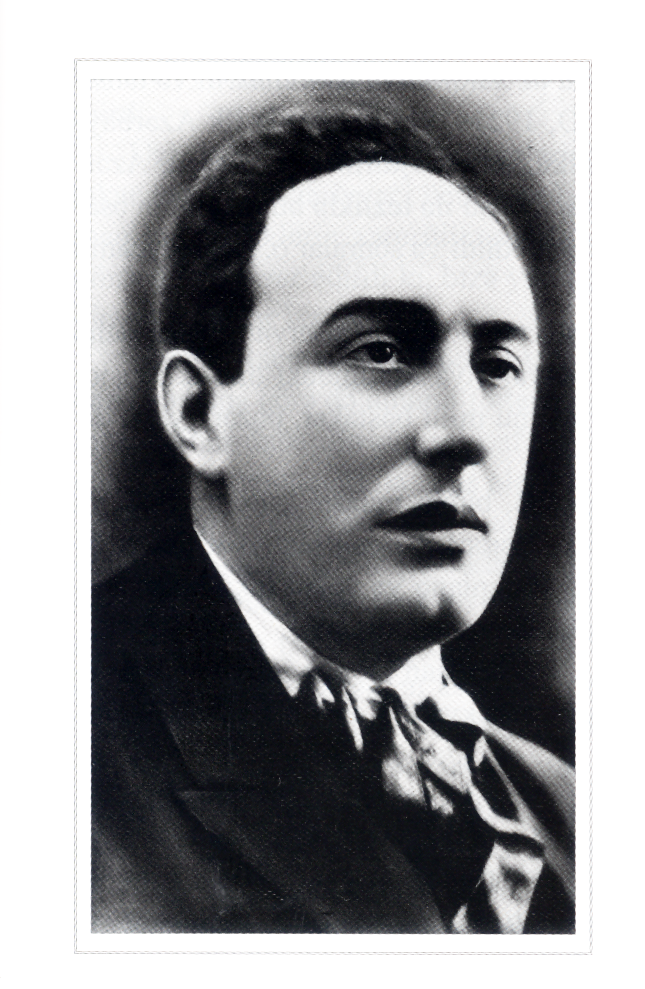
Throughout his entire career, Uzeyir Hajibeyov served as a true inspiration and organizer of musical enlightenment and education within his own nation. In the years 1921-1922, he established the first Azerbaijan Musical College. The graduates of this school were primarily the national talents of Azerbaijan. At the initiative of U. Hajibeyov, this musical college was soon evolved into the Azerbaijan State Conservatory, eventually becoming the focal point of music in Azerbaijan.
Under the guidance of Uzeyir Hajibeyov, the Azerbaijan State Conservatory, and subsequently a ten-year music school affiliated with the conservatory, which became its main "reserve force", as well as the Azerbaijan State Music College, transformed into educational institutions preparing national composers, theorists, conductors, and performers.
Almost all of the modern figures in Azerbaijani music have been educated at this conservatory, and their work is somehow connected to it. Initially, the conservatory only had departments for piano and vocal studies, but later all musical specialties were established.
Uzeyir Hajibeyov always wanted the standard of music education at the Azerbaijan State Conservatory to be on par with the conservatories in Moscow and Leningrad.
In his educational activities, the great composer relied on the principles of realistic folk art, which he deeply understood and felt. Expressing disgust for formalistic music, shallow, superficial, and external approaches to art, Uzeyir Hajibeyov revered the greatness of the works of Russian classical composers – M. Glinka, A. Bo rodin, M. Mussorgsky, P. Tchaikovsky, A. Rubinstein. The richness of melodies and sophistication of form in their works evoked a sense of admiration in the composer. He also highly esteemed the best examples of Western European music.
When someone tried to persuade Uzeyir Hajibeyov of the "beauty" of a formalistic work, he would smile and simply reply, "I prefer Tchaikovsky", and then add, "Music should be written in a way that is understood not only by a narrow circle of people with corrupted taste, but by the entire populace".
The principled stance of Uzeyir Hajibeyov in evaluating musical works commanded respect for his straightforward and convincing approach to music.
His powerful voice calling for simplicity, populism, and realism in musical creativity was heard many times at the composer’s department of the Azerbaijan State Conservatory. The hatred of Uzeyir Hajibeyov towards the decadent modern art of the West was a vivid manifestation of his healthy spirituality. He could not reconcile himself with the "art" that was alien to the people.
Uzeyir Hajibeyov strongly instilled in his students the value of hard work. He vehemently rebuked those who neglected the importance of knowledge in such crucial areas for the future composer, conductor, and music theorist, such as polyphony, orchestration, and score reading. He reiterated multiple times: we do not need half-baked knowledge and immature musicians, but rather deep expertise and well-prepared professionals.
Uzeyir Hajibeyov placed particular emphasis on the role of the piano in the student’s musical education, hence he devoted significant attention to the general piano class. Within this class, he guided musicians in the right direction for their development and aimed to acquaint them with a wide range of musical compositions.
Uzeyir Hajibeyov was an advocate for dynamic and engaging teaching. If a teacher complained that students were not attending his lectures, U. Hajibeyov would smile, look at the complainer, and say, "Are you sure that only the students are to blame for the low attendance of your lectures?" After such a conversation, the teacher would review his methodological principles, find his own shortcomings, and understand what exactly the director was hinting at.
The significant improvement in the level of theoretical musical education at the conservatory, as well as the gradual simplification of the curriculum of the theoretical-compositional faculty, should be considered a direct result of Uzeyir Hajibeyov’s strict control.
While teaching the subject of "Harmonies in Azerbaijani Folk Music", Hajibeyov aimed to elucidate the fundamentals of Azerbaijani folk music to all students. Uzeyir Hajibeyov also devoted significant attention to expanding the scientific and methodological work at the conservatory. Following the establishment of a department that became the center of methodological and scientific activities, work in this area was carried out according to a carefully developed plan. The pedagogical staff of the conservatory were tasked with important goals – improving the quality of the educational process, developing methodological issues, conducting research, and enhancing the knowledge of the professorial and teaching staff. All of this work was carried out under the direct guidance of Uzeyir Hajibeyov.
Any conscientious work dedicated to Azerbaijani musical culture or the creativity of Russian classics elicited sympathy and respect from Uzeyir Hajibeyov. He supported research on the theory and methodology of musical performance, the essence of the creative process, issues of musical memory, and the disclosure of stylistic features. Conversely, false science, hiding behind noisy pretense and artificial titles, was alien and repugnant to him.
Uzeyir Hajibeyov paid great attention to the creation of a textbook on the history of Azerbaijani musical culture. Only a severe illness prevented him from leading this important and large-scale work entrusted to him by the Azerbaijan State Conservatory.
Uzeyir Hajibeyov’s dedication to research led to the creation of valuable works at the Azerbaijan State Conservatory. In order to centralize efforts in research related to the history of Azerbaijani music, the composer aimed for close collaboration between the Institute of Arts of the Academy of Sciences of the Azerbaijan SSR and the conservatory.
Guiding the expansion of scientific activities, Uzeyir Hajibeyov believed it was necessary to boldly promote young national talent. He could not imagine a professor at a higher music educational institution who did not engage in research work, and set the task for each conservatory staff member to reach the level of a person capable of genuine scientific generalization.
Uzeyir Hajibeyov attached great importance to the methodology of the educational process, as well as to issues of educating teachers and students from the perspective of Marxist-Leninist theory. He consistently emphasized to the teaching staff the significance of this factor in shaping musical consciousness. Repeatedly, he noted that the Soviet Conservatory should not prepare individuals who stand apart from politics, but politically mature and well-prepared Soviet specialists, Soviet musicians. In his speeches on this topic, a clear thought was traced that music is a part of the great struggle of the entire Soviet people under the leadership of Lenin’s party for the embodiment of socialist truth. Such a party approach of Uzeyir Hajibeyov towards the goals and tasks of musical education lent special persuasiveness to his pedagogical directives.
Uzeyir Hajibeyov never forgot about the personality of the students. During artistic council meetings, he would dwell on the personal qualities of each student, striving to analyze their future as a specialist in detail. This attitude towards the musician’s personality showed how seriously he regarded the conservatory graduates.
Due to the guidance of Uzeyir Hajibeyov, the Azerbaijan State Conservatory significantly expanded its concert activities. As a result of the overall development of the musical education process, the artistic level of these concerts noticeably increased, and their public reception extended far beyond the institution. The conservatory concerts introduced audiences to the best examples of world musical literature and became one of the most significant factors in musical life in Baku. Uzeyir Hajibeyov considered it important for the students of the Azerbaijan State Conservatory to participate in performance competitions held in Moscow, Leningrad, and Baku. He either chaired the jury of these competitions himself or was a member of it. The success of the contestants and the recognition of their achievements by the musical community in the capital were the highest reward for Uzeyir Hajibeyov.
Uzeyir Hajibeyov advocated for expanding the repertoire in performance departments, creating new repertoire, and incorporating Azerbaijani themes as a mandatory component. He strongly supported transcriptions of Azerbaijani themes initiated by the piano department, viewing this initiative with approval.
During Uzeyir Hajibeyov’s leadership at the conservatory, valuable ensembles such as orchestral, choral, and chamber classes were established, contributing to the enhancement of students’ professional training.
The composer paid special attention to vocal education, considering it one of the most important areas in the conservatory, and provided conditions for the education of talented youth with natural vocal abilities.
During the Great Patriotic War, particular mention should be made of Uzeyir Hajibeyov’s leadership in the extensive military and educational work conducted by the conservatory. He personally took interest in the programs of the teaching staff and students who performed in military hospitals, units of the Soviet Army and Navy, carefully overseeing the selection of necessary repertoire and guiding this noble activity of the conservatory.
During the war years, the Azerbaijan State Conservatory gave over a thousand concerts for wounded and recovering soldiers. When discussing Uzeyir Hajibeyov’s organizational activities in the conservatory, it is also necessary to say a few words about his personal qualities.
Uzeyir Hajibeyov’s tenure as the director of the conservatory was ragrded by the faculty and students as an extremely important and significant event. His persona as a creative artist and author of inspired works was highly esteemed. The peak period of his compositional work was closely tied to his activities at the conservatory. The beautiful music of the opera "Koroglu" first resounded within the walls of the conservatory for its ensemble.
Respect for Uzeyir Hajibeyov as an artist, director, and prominent public figure motivated the academic community and students of the Azerbaijan State Conservatory to improve the quality of their work. It is also worth noting his sincerity and friendliness. His humanism, high intellect, and principled nature endeared him to all who came into contact with him.
The seeds he planted bore rich fruit. The generation of musicians nurtured by the Great Man and Artist Uzeyir Hajibeyov continues to fight for national identity and artistic truth in the arts. They will preserve and further develop the legacy of their teacher.