

Uzeyir Hajibeyli
Mammadsaleh Ismayilov. Compassionate teacher
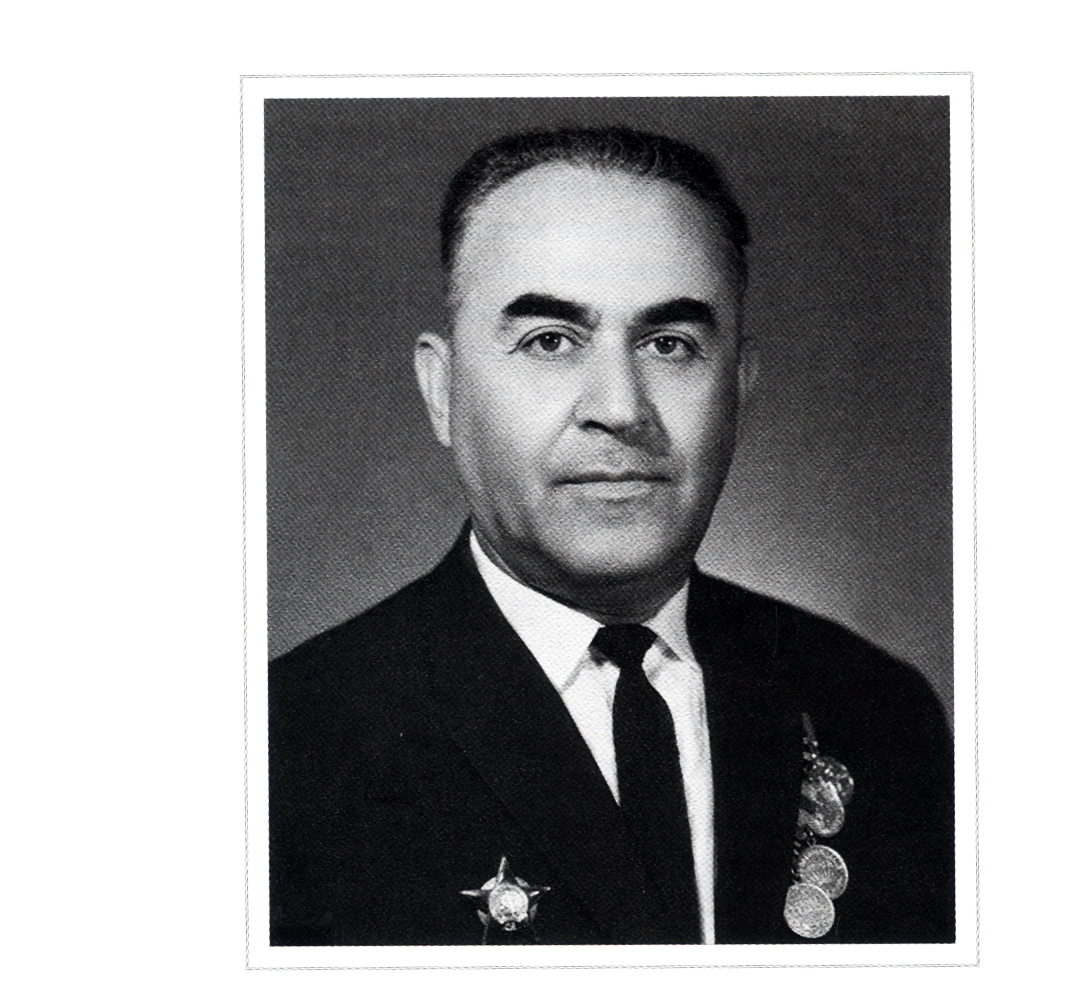
I first heard the name Uzeyir Hajibeyov in 1925–1926. At that time, I was about 11 or 12 years old and was studying at the Nukha (now Shaki) model-experimental school. It was a kind of boarding school.
My teacher Ibad Rahmatullayev told me about the great musician and composer Uzeyir Hajibeyov. Ibad teacher had studied in the tar class at the music school newly established by Uzeyir Hajibeyov in Baku. At that time, I had a great passion for music. I lived with the desire to see Uzeyir Hajibeyov; his image always stood majestically in my imagination, and I sincerely wished to become his student. Soon, I achieved this desire.
In 1930, I became a student of the preparatory department (workers’ faculty) of the Azerbaijan State Conservatory. When entering the conservatory, I was examined by Uzeyir Hajibeyov himself (he was the chairman of the admissions committee). I cannot express how deeply delighted I was by the personal acquaintance with the great musician that day.
Despite my advanced age (16 was, of course, too old to begin studying music), Uzeyir Hajibeyov took my request into consideration and admitted me to the violin class. Shortly afterward, Uzeyir Hajibeyov learned that I could also play the tar. After listening to me (the audition was attended by Gurban Primov and Mansur Mansurov as well), he advised me to attend the tar class lessons as well. My tar playing pleased Uzeyir Hajibeyov so much that he even included me in concert brigades traveling to the republic’s districts. Later, while studying at the history-theory faculty, I learned the fundamentals of Azerbaijani folk music from Uzeyir Hajibeyov. Uzeyir Hajibeyov always strove to ensure his lessons had a creative character. To this end, he required students to compose various melodies in a serious style based on Azerbaijani maqams to better master the laws and stylistic features of Azerbaijani folk music. By the time I graduated from the conservatory, I was honored to write a thesis dedicated to the opera "Koroghlu". Despite his limited time, Uzeyir Hajibeyov always provided me with the necessary guidance for my work. In 1946, after the Great Patriotic War ended in our victory, upon Uzeyir Hajibeyov’s initiative (he had sent a letter to the commander of the Central Army Headquarters, Marshal of the Soviet Union I. S. Konev), I was discharged from the army and returned to my homeland.
Uzeyir Hajibeyov, demonstrating paternal care, arranged for my employment at the Institute of Arts of the Azerbaijan SSR Academy of Sciences, which he himself directed. Under his guidance, we - his young students at that time devoted all our strength and efforts to the thorough study and research of Azerbaijani folk music, its history and theory.
I must now note that I had the honor of translating into Azerbaijani the great composer’s scholarly work "The Fundamentals of Azerbaijani Folk Music". This book is an exceptionally valuable work for studying the characteristics of Azerbaijani folk music.
In the field of Azerbaijani folk music, the continuation and development of Uzeyir Hajibeyov’s scholarly research traditions is the duty of everyone who owes him so very much.