

Uzeyir Hajibeyli
Ashraf Abbasov. My first encounter
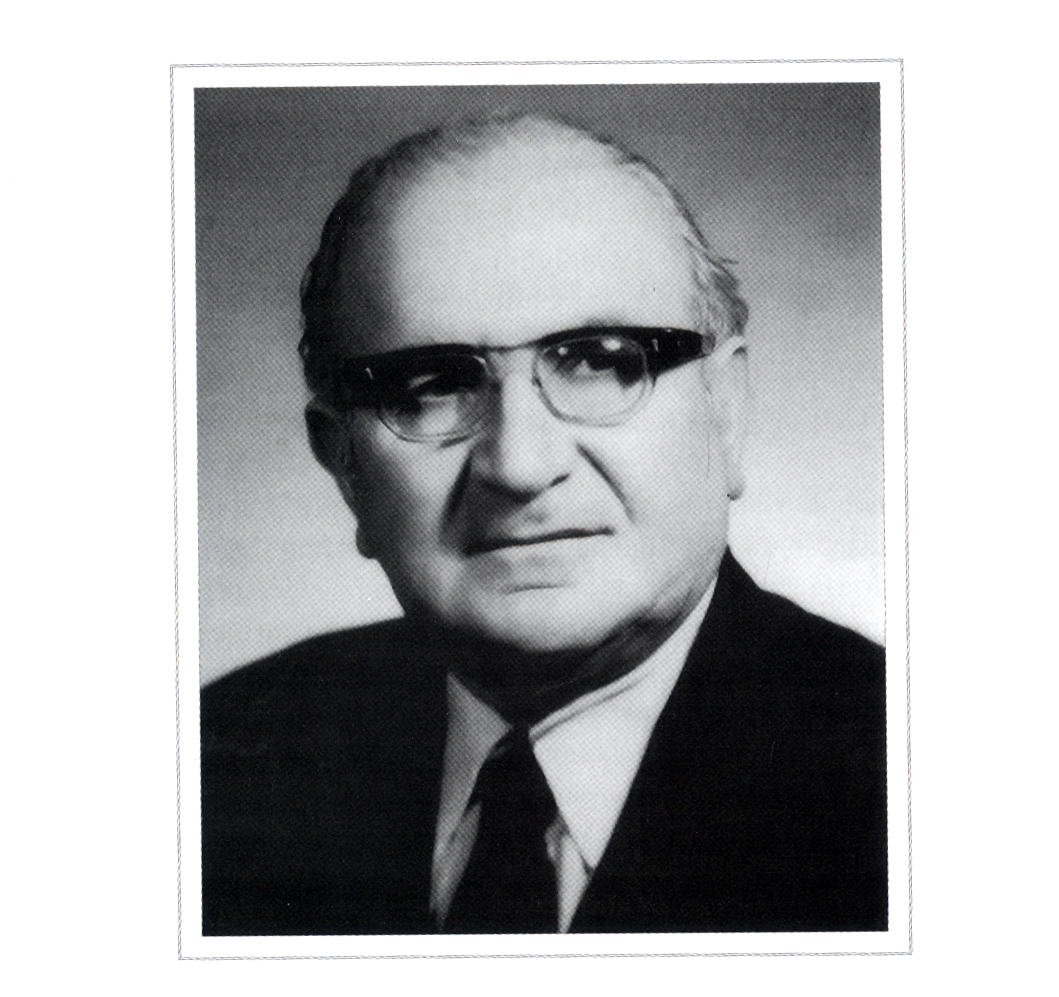
The great composer and playwright, renowned musical and social activist, outstanding educator, and irreplaceable individual Uzeyir Hajibeyov first came to my attention in Shusha from my music teacher Fatma khanim Zeynalova. Fatma khanim was one of the first Azerbaijani students of Uzeyir Hajibeyov. We always listened with great interest to her stories about her teacher.
When I was studying at the Shusha Music School, I started composing monodic melodies. I also composed several etudes for the tar, the instrument I played. After consulting with Fatma khanim, we decided to send these initial musical experiments of mine to Uzeyir Hajibeyov. And that’s what we did. Along with the sheet music, Fatma khanim sent a letter to Uzeyir bey, in which she told him about me. A few days later, a response came. The great composer advised me to continue my musical education in Baku after completing the tar class at the Shusha Music School. In August 1936, I arrived in Baku for the first time.
First and foremost, I had a strong desire to meet with this wise person, talk to him, and get advice. However, I wondered whether such a great master would have the time to receive me — a young boy from the neighborhood who had not yet turned 16. Would he even be willing to meet with me and engage in conversation?
I vividly recall the moment when, after much contemplation, I made a phone call from the post office near the Baku Council to the residence of Uzeyir bey. The great composer himself picked up the telephone and answered. As soon as I started telling him about myself, stuttering nervously, he immediately invited me to his home. The simplicity of his human interaction struck me deeply. To be honest, I was completely taken aback as I did not expect such a warm reception. With great excitement, I made my way to 75 Verkhniaya Priyutskaya Street, to his residence. I entered the courtyard. There was no one outside. A strange silence enveloped the surroundings, interrupted only by the faint sounds of a piano playing softly. I approached and opened the door to the glassed veranda. An ordinary, pleasant-looking elderly woman of short stature invited me inside. Later, I learned that she was one of Uzeyir Hajibeyov’s sisters, the late Abukhayat Khanum. The first room was empty. I proceeded to the second room. This room was decorated very simply, yet tastefully. Seated at the table was a modestly dressed man wearing glasses. Upon seeing me, he raised his head, smiled, and with gentle kindness and warmth said, "Welcome, young man, come in, have a seat." I sat down. "This must be Uzeyir bey’s secretary," I thought to myself. "He will soon go into another room, inform Uzeyir bey about my arrival, and request permission for me to enter." As I pondered this, he leaned forward, retrieved my etudes from the bottom drawer of the table, handed them to me, and said, "Ashraf, to become a true composer, you must first acquire an excellent musical education." Overwhelmed with joy, I was unsure how to react. I had personally met Uzeyir Hajibeyov.
With his direct assistance, I enrolled in the composition class of the Azerbaijan State Secondary Special Music School in September of the same year. Every time Uzeyir bey saw me, he inquired about my lessons, my life, invited me over, and provided both material and moral support. He was a man with a big heart and deep humanity. Uzeyir Hajibeyov showed the same attitude towards all of his students and people in general. He instilled in his students high human qualities — deep knowledge of classical music and folk art, love and devotion to the people and the Motherland. Later, I often visited this family. The simplicity, sincerity, and high culture prevailing there always amazed me. After each meeting with this great master, a crystal clear, sincere, and open person, we, the young ones, as if gained new strength — our desire to live, learn, and create grew.
In the last days of April 1937, a lively conversation was taking place among students in one of the classrooms of the Azerbaijan State Music School located on Maxim Gorky Street. I was also present there. Following my graduation from the tar class at the Shusha Music School, I continued my education at the Baku Music School. Our conversation initiated after the music theory teacher shared a brief yet very intriguing information about the new Azerbaijani opera with us. Our teacher had attended rehearsals of the new opera, which was being prepared at the Azerbaijan State Opera and Ballet Theater named after M.F. Akhundov, and he mentioned that the piece had made a huge impression on him. We too were delighted, proud of this event, and eagerly awaited the opportunity to listen to the new opera.
The work being discussed was the opera "Koroglu" written by our beloved and esteemed composer Uzeyir Hajibeyov. The premiere of this opera took place on April 30 of that year. The news of the new, magnificent opera quickly spread far and wide. This event became a true celebration of Azerbaijani art. There were so many people eager to hear the opera "Koroglu" that we, as students, could not get into the theater in the first few days. Finally, after several performances, we were fortunate enough to hear this work. Uzeyir bey himself conducted the production. From the first sounds of the tar to the final chords of the choir, the opera captivated us and filled us with delight. At that time, an overture had not yet been written for the opera, so the piece began with a chorus of peasants, where the first musical phrases were performed on tar.
Much time has passed since then. The opera "Koroglu", which had been on stage for a long time, has garnered the love of audiences both within our republic and far beyond its borders. Referring to the opera "Koroglu," one cannot help but recall the beautiful words of the great Russian composer and critic A. N. Serov: "Before true beauty in art, time is powerless, otherwise we would not appreciate and love Homer, Dante, and Shakespeare, Raphael, Titian, and Poussin, Palestrina, Handel, and Gluck."
The opera "Koroglu" is an eminent and profound work of art in every respect. In this piece, the author vividly portrays the life of the people, their heroic struggle for freedom and happiness, with a broad epic scope and striking musical imagery. The musical images of the opera are rich in content and filled with deep human emotions. The historical events here are infused with great ideals of our modern life and characterized by realistic musical colours. "Koroglu" unites and advances the best, forward-looking traditions of rich folk creativity and classical musical heritage. It is for these reasons that we love and highly appreciate this opera.
Uzeyir Hajibeyov always emphasized in his conversations with his students: "A composer should amaze and inspire listeners with his works." And now, every time we listen to the opera "Koroglu" or its individual fragments, we clearly feel how right Uzeyir Hajibeyov was and how demanding he was of his own creativity. The opera "Koroglu" truly captivates us. Over the years, this work becomes even closer, dearer, and more cherished to us. This is because the opera celebrates the thoughts and aspirations of the people, their life, and the highest ideals in their native language.
There are individuals in life who continue to live even after they have passed away. The people cherish the memory of such individuals in their hearts, as their hearts always beat in unison with the heart of the nation, their essence intricately linked with that of the people, their life intertwined with that of the nation. The exaltation of the struggle of the people, their brightest desires and aspirations, is the main purpose of life and creativity for such individuals. The conscious life and fervent activity of the great composer of the Azerbaijani people, Uzeyir Hajibeyov, was dedicated precisely to this goal — the fight for realism and nationality in music. Being one with the people, glorifying their soul and creative work, was a principle to which Uzeyir Hajibeyov consistently remained faithful. The great master often said to us in conversation: "Music should be composed in a way that it is understood not just by a narrow circle of tasteless individuals, but by the entire nation. Music should inspire and uplift humanity." The undeniable truth is that the works created by the author of these words, with their magnificence and genuine nationality, continue to captivate listeners to this day.
The life and creative principles of Uzeyir Hajibeyov serve as a significant school for Azerbaijani composers. He expressed hope for the future of our music by saying: "There are bright prospects for the development of Azerbaijani music art. To achieve this, it is necessary to search courageously, learn, and work productively. It is essential to live with the spiritual essence of the Soviet people, express their hopes and desires, and embody our people’s inexhaustible optimism through musical means." These beautiful words are a call to new creative heights for all music servants of Azerbaijan. Uzeyir Hajibeyov’s brilliant creativity, which is deeply connected to the people and the motherland, and promotes lofty intellectual ideals, inspires Azerbaijani composers to achieve new successes. As a powerful interpreter of the people’s spirit, a great composer, a distinguished scientist, a dramaturge and prominent artist, an invaluable individual, and our unforgettable teacher, Uzeyir Hajibeyov has not passed away. He lives on. He walks with us towards the future.