

Uzeyir Hajibeyli
Elmira Abasova. Uzeyir Hajibeyli is the founder of the Azerbaijani school of composition
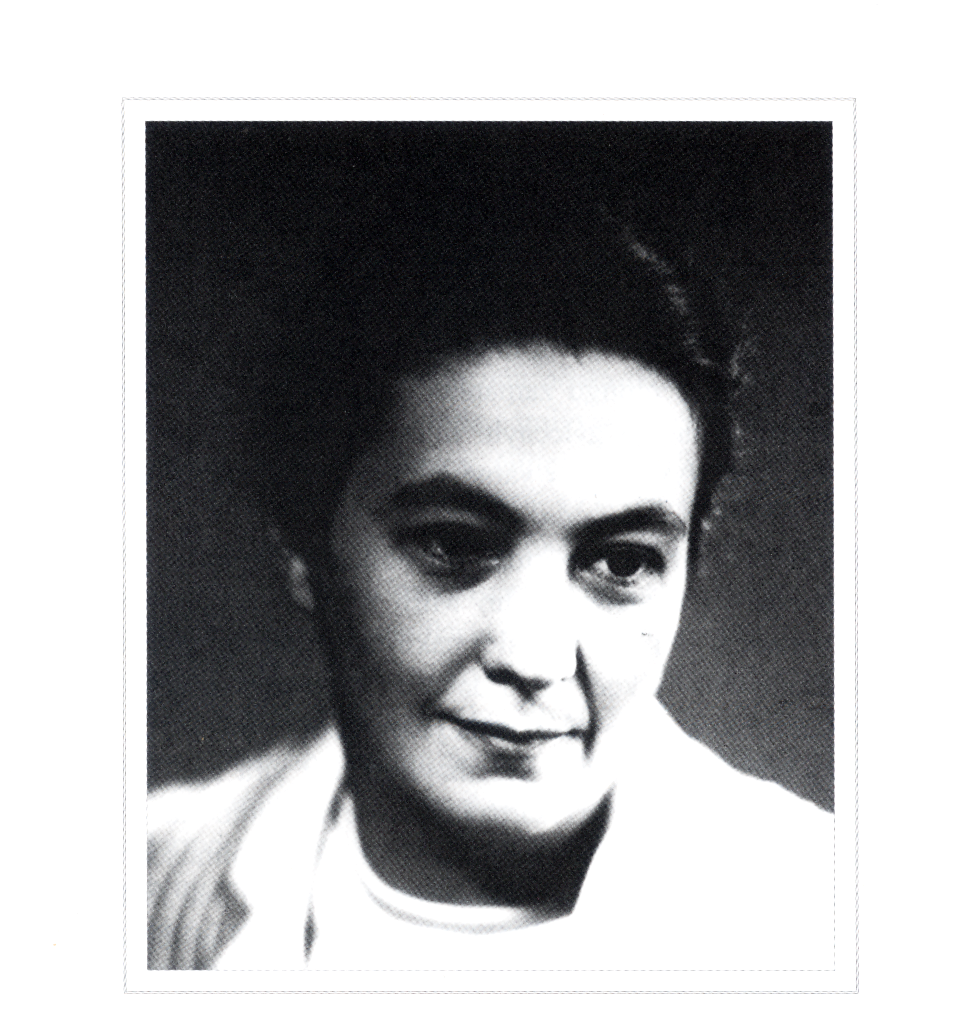
Much has been written and said about the great Azerbaijani composer Uzeyir Hajibeyli. Yet, the definitive book about him has still not been written. And it never will be. For Uzeyir Hajibeyli is eternal—just as our folk songs, dances, ashiq melodies, and mughams are eternal. Every new generation that listens to Uzeyir Hajibeyli’s music experiences such a profound sense of admiration that it can only be compared to the emotions we felt when we were fortunate enough to attend the premieres of his musical stage works. The music scholars and artists of our time and of the future will always find new, inexhaustible dimensions in Uzeyir Hajibeyli’s personality and creative legacy to explore.
Every great artist is evaluated through two aspects: the first is their contribution to national culture, and the second is their place in world culture. In the context of national musical culture, the time has come to assess Uzeyir Hajibeyli’s creative legacy not merely from a musical standpoint, but from the broader perspective of Azerbaijani artistic culture as a whole. This approach reveals a series of unexpected analogies—one of the most striking being the parallel between Nizami and Uzeyir Hajibeyli. A number of scholars rightly argue that Nizami was not only the herald of the Renaissance in Azerbaijan but across the entire Muslim East (encompassing the Near and Middle East). Similarly, through his musical compositions, extensive scholarly work, pedagogical innovations, and public activism, Uzeyir Hajibeyli revived the national and, more broadly, Eastern Renaissance in the 20th century. Nizami absorbed the rich poetic heritage of preceding eras and, building upon it, forged a new art of poetry of unparalleled artistic significance. In the same way, Hajibeyli synthesized the vast developmental path of Azerbaijani music, unlocking new and inexhaustible horizons for its elevation and enrichment.
Another striking analogy is that between Fuzuli and Uzeyir Hajibeyli. Fuzuli was the first poet to elevate the Azerbaijani language to the level of high classical artistry. Similarly, Uzeyir Hajibeyli became the first composer to raise the national musical style to the stature of a foundational classical achievement in the art of composition. Fuzuli remains the most celebrated poet whose ghazals were intricately and organically adapted into the sophisticated musical language of mugham art. In continuation of this magnificent tradition of national artistic culture, Uzeyir Hajibeyli immortalized and further glorified the poet’s legacy by embodying Fuzuli’s "Leyli and Majnun" in operatic form—transforming the literary masterpiece into a timeless musical monument.
Another significant analogy exists between Mirza Fatali Akhundov and Uzeyir Hajibeyli. M.F. Akhundov laid the foundation for a new form of artistic creation in Azerbaijan - dramatic theater - while elevating prose to the level of development achieved by national poetry. Similarly, Uzeyir Hajibeyli pioneered new paths for the development of musical composition in Azerbaijan by creating national musical theater and, first and foremost, opera.
M.F. Akhundov was the first in literature to address modern reality through his distinctive philosophical-critical approach. Similarly, Uzeyir Hajibeyli, through his musical and literary works, embodied the world around him by creating unparalleled characters like Asgar, Gulchohra, Vali, Telli, Sultan bey, and Mashadi Ibad - typical portraits representing various social strata of late 19th and early 20th century society. Uzeyir Hajibeyov perceived the national essence with all his heart and intellect. This constituted the core of his artistic "self". In effect, the concepts of national identity and Uzeyir Hajibeyli became synonymous. This represents the rare quality of true geniuses like Hajibeyli and Akhundov. Both M.F. Akhundov and U. Hajibeyli were great enlighteners who undertook the mission of educating broad masses of the population. Both were ardent visionaries who contemplated their peoples prosperous future. Each established his own artistic school, and through their creative works based on aesthetic principles rooted in the interconnection of national and European artistic traditions, they bridged Eastern and Western cultures.
The creative work of U. Hajibeyli possesses profound historicity, stemming from its artistic qualities and democratic character. Within political circumstances characterizing Azerbaijani reality, he demonstrated the ability to perceive complex and contradictory struggle tendencies of various social phenomena, as well as an optimistic spirit. Through his music, the composer embodied the life of the Azerbaijani people, successfully interconnecting various stages of its development. Thus, in his individual operas, U. Hajibeyli brought medieval reality, pre-feudal domination, and manifestations of violence and despotism into the modern era, allowing the echoes of the past to resonate within them. Nevertheless, in events of the distant past, he discerned the presence of urgent social problems.
For U. Hajibeyli, historicity did not at all imply archaism. The composer embodied ancient epochs through the intonational resources of contemporary musical art of his time. It is precisely this approach that has imbued all of Hajibeyli’s works on historical themes with the breath of new life, revealing the profound expressive power of his music. His early, highly lyrical operas, everyday musical comedies, and the heroic opera "Koroghlu" were written on diverse, seemingly unrelated subjects. Yet all of them constitute a realistic artistic depiction of historical events along a unified developmental trajectory - a broad musical panorama of Azerbaijani people’s life. U. Hajibeyli instilled great social significance into the compositional school that had formed in Azerbaijan.
V. Konen rightly believed that U. Hajibeyli’s artistry held particular significance in the formation of the opera genre, which plays an especially active role in the development and establishment of national musical cultures. Three musical stage works constitute the pinnacle of U. Hajibeyoli’s creative output.
The opera "Leyli and Majnun" (1907-1908) constitutes a unique phenomenon in the entire history of musical composition. It represents both the "culmination" and the source of a new national musical culture - serving as the sole and most robust bridge between oral professional traditions and written musical art in Azerbaijan. U. Hajibeyli organically integrated the perfected forms of Azerbaijan’s centuries-old oral musical tradition with operatic "construction". This very integration defines the innovative significance of "Leyli and Majnun". Moreover, within the opera’s musical fabric (both in its treatment of folk melodies and original compositional material), we already discern the "embryonic forms" of Hajibeyli's future compositional ideas. These would later play a pivotal role in actualizing the reciprocal connections between Eastern and Western musical cultures.
The composer’s selection of this famous international Eastern legend (of Arabic origin) demonstrates that his artistic vision addressed not merely Azerbaijani but rather the broader Eastern reality. The opera’s central idea emerged from a philosophical worldview characteristic of the Renaissance period. Majnun is a genius figure - a solitary hero who perceives worldly afflictions and struggles against them. Yet his struggle is sustained by faith in the power of eternal love, with which he forms an inseparable unity through his consciousness and his integral "self". Misunderstood by people, even by his closest kin, Majnun chooses the ascetic life in nature’s inaccessible realms. The demise of the madly enamored young poet Majnun constitutes an inevitable tragic denouement stemming from his irreconcilability with reality.
The musical comedy "Arshin Mal Alan" (1913) effectively concluded the early period of U. Hajibeyli’s compositional career, ushering in a new, mature phase of creativity. In this work, the composer articulated with precision for the first time the fundamental idea of his social worldview: that historical progress advances through justice and the elimination of negative, obsolete aspects of the past. While "Leyli and Majnun" and Hajibeyli’s other early operas ("Sheikh Sanan", "Rustam and Sohrab", "Asli and Kerem") reveal the tragic nature of medieval Eastern life and its persisting manifestations, "Arshin Mal Alan" demonstrates the composer’s emerging vision of the future - his conception of a happy society. Hajibeyli was convinced that the Azerbaijani people yearned to emerge from darkness into a new life free from all superstitions. Nevertheless, "Arshin Mal Alan" represents a specific idyll - the aspiration of the composer-citizen - which explains the indirect representation of socio-historical contradictions present in Hajibeyli’s contemporary society through the medium of comedy. The work’s central thematic focus lies in affirming the necessity to dismantle the patriarchal-feudal domestic structure - and indeed the entire medieval-rooted way of life that had become entrenched in society.
"Arshin Mal Alan" transcends the boundaries of the operetta genre and may rightfully be classified as a comic opera - by virtue of the primary dramatic significance of its music, the musical realization of all stage development, and the distinctive musical characterization of its participants. In this regard, U. Hajibeyli substantially enriched Azerbaijani musical theater.
In "Arshin Mal Alan", U. Hajibeyli’s distinctive personal style crystallized. Here emerged a special type of national song that significantly enriched the melodic forms typical of folkloric art. The principal feature distinguishing "Arshin Mal Alan"’s musical-genre foundation from earlier musical comedies ("Husband and Wife", "If Not That One, Then This One") and mugham operas lies in the prominent role given to operatic-arioso style musical numbers. For the first time in Hajibeyli’s oeuvre, arias and ariosos became one of the most crucial foundations of musical dramaturgy.
The musical score of "Arshin Mal Alan" stimulated U. Hajibeyli’s active explorations in the realm of harmony. The conventional major-minor chordal system failed to satisfy the composer. He pursued instead the development of an "Azerbaijani" harmonic language that aligned with the intonational content of indigenous modal structures (maqams). Hajibeyli’s creative imagination manifested with particular vitality in the work’s compositional architecture. The periodic and couplet-based forms predominant in folk song traditions were transformed in "Arshin Mal Alan" into diversified periodic structures and binary/ternary forms (both simple and complex). This work effectively marked the culmination of Hajibeyli’s early compositional period, representing a crucial evolutionary stage in his innovative musical thinking.
"Koroghlu" (1937) represented U. Hajibeyli’s logical ascent toward a new, "programmed" zenith. The evolution of the composer’s artistic thinking through innovative pathways found its perfect expression in this opera. Primarily, this manifests in the realm of imagery and content. Following the personal-social themes presented in "Leyli and Majnun" (in the elevated lyrical-tragic plane) and "Arshin Mal Alan" (in the vibrant domestic comedy-idyll plane), Uzeyir Hajibeyli achieved an epic generalization of Azerbaijani people’s history in "Koroghlu". The opera’s protagonists are simultaneously representatives of democratic masses and vivid individuals with distinct personalities.
The musical dramaturgy of "Koroghlu" distinguishes itself as an exemplar of the traditional heroic-epic opera genre through its novel nuances. U. Hajibeyli interprets the heroic pages of the distant past, his people’s life, and their historical development process through a profoundly personal lens.
This dramaturgical concept finds its expression in the formation and continuous development of vivid, individualized intonations cultivated within the fertile soil of Azerbaijan’s oral musical tradition. The opera’s musical fabric is founded upon an integrated system of leitmotifs and multiple intonational "arches", which undergo flexible and uninterrupted transformation in accordance with the narrative content - adapting organically to events, character portrayals, and dramatic actions. Symphonism, in the truest sense of the term, constitutes the opera’s distinguishing characteristic.
The opera’s musical language reveals a complex interplay of national, distinctive, yet simultaneously "universal" characteristics, embodying the classical "linguistic" features associated with the Viennese School and the compositional art of Glinka-era Russian music. The work’s musical-aesthetic conception demonstrates perfect coherence, synthesizing the historical development of national musical culture while establishing multilateral connections with European compositional practice across all parameters.
The opera "Koroghlu" for the first time granted Azerbaijani music the right to be worthily and brilliantly represented within the classical achievements of modern world music culture from the perspective of compositional art. It has often been rightly noted (including by the author of this article) that "Koroghlu" marks the maturation of national symphonism, and that the opera became one of the fundamental sources for Azerbaijani ballet and cantata-oratorio composition. It should also be noted that U. Hajibeyli’s systematic engagement with the operatic genre was conditioned by his social activism. Parallel to the opera "Leyli and Majnun", Hajibeyli created a national musical theater, which stands as one of the composer’s greatest contributions. The opera accelerated Hajibeyli’s organizational-practical work in other domains (establishing the republic’s conservatory, Azerbaijani Turkic Music School, choral collective, and folk instrument orchestra), while also stimulating his scholarly research, publicistic writings, and folkloristic activities.
On a universal scale, U. Hajibeyli must be regarded, first and foremost, as the founder of the new Azerbaijani national school of composition that worthily joined the developmental mainstream of world musical culture. In this context, one of the most natural parallels emerges between Glinka and Hajibeyli. However, Hajibeyli resolved an artistically more complex problem than Glinka. Through the formidable talent of the Azerbaijani composer, conditions were created for the fundamental dismantling of the "Great Wall" that had stood firmly for centuries between Eastern and Western musical cultures.
When examining U. Hajibeyli’s creative work within this framework, we consider it methodologically justified to introduce the new musicological term "polysystemic musical thinking". This term signifies that it reveals the essence of all Hajibeyli’s innovative tendencies aimed at activating the mutual influence and connections between: (1) classical music systems, genres, and traditions formed through the long-term evolutionary process of European compositional practice, and (2) national oral-tradition music (both folk and professional).
U. Hajibeyli perceived European music through the prism of his national musical consciousness. Characteristically, while enraptured by Mozart, he never "imitated" the figurative intonational structure of his music. Notably, when utilizing thematic material from Mozart’s Piano Sonata in D major (K. 915), Hajibeyli transposed this beloved music into the Chahargah maqam (First Fantasy for folk instrument orchestra). Undoubtedly, Hajibeyli studied Bach’s polyphony and sought to apply classical fugal forms in his own works. However, in his first such attempt (the intermezzo from Act II of the musical comedy "Husband and Wife", composed in fughetta form), he created music not in Bach’s style but imbued with the spirit of "Reng". In this regard, the fugato from "Koroghlu" ("Chanlibel" chorus) represents a more significant example: a theme rooted in ashiq music and folk dance art ("Yalli") develops according to classical fugal compositional principles while undergoing intonational transformation based on the national modal foundation (Shur).
The polysystemic nature of U. Hajibeyli’s musical thinking manifested primarily at the genre level. As previously noted, the composer became the founder of Azerbaijani opera, creating a brilliant synthesis between theatrical elements characteristic of national artistic traditions (folk and religious performances, puppet theater, ashiq art, etc.) and the European operatic form in its entirety. In selecting opera as the inaugural genre of Azerbaijani compositional art, Hajibeyli intuitively grasped its fundamental dramaturgical characteristic, accepting it - in N. Rimsky-Korsakov’s words - as a "musical work" first and foremost. In Hajibeyli’s early operas, music did not emerge from stage action but rather determined it. However, the musical language of these initial operas predominantly drew upon mugham - the highest achievement of Azerbaijan’s oral professional music tradition. The formation and development of this genre was intrinsically linked to the creation of free melodic improvisation unconstrained by text, capable of: expressing the subtlest nuances of emotional states with remarkable clarity, rendering them vividly tangible, embodying spiritual tremors, conveying religious-philosophical and secular-ethical ideas. Mugham represents, above all, the supreme artistic embodiment of emotional depth and its chromatic spectrum. Precisely for this reason, Hajibeyli selected it as the primary expressive medium for: the musical characterization of his protagonists, the portrayal of legendary heroes who had "lived" centuries prior, the personification of timeless moral principles preserved in the collective consciousness of 19th-20th century society.
The formative period of mugham holds particular significance as it coincided with a psychological transformation marked by growing tendencies toward independence and spiritual freedom within feudal society. Unsurprisingly, the active development of this genre was historically conditioned by such sociocultural shifts. A similar transformation had been brewing in Azerbaijan between the late 19th and early 20th centuries. U. Hajibeyli’s mugham opera emerged as a direct response to the intense emotional atmosphere permeating Azerbaijani society during this period. Operetta, too, had long been considered exclusive to the European stage. In the early 20th century, the musical comedy genre appeared fundamentally prohibited for the Muslim East—still rooted in feudal structures and constrained by Sharia law. Yet Hajibeyli identified subject matter organically suited to both this genre and Eastern realities: domestic themes framed through pressing social issues. Like his early operas, Hajibeyli’s operettas abound with national musical material, their foundations firmly rooted in folk song-dance traditions. Consequently, both Hajibeyli’s operas and musical comedies represent: a brilliant synthesis of Azerbaijan’s entire oral musical heritage, a distinctive encyclopedic compendium of traditional music, works equally accessible to Eastern and Western audiences alike.
It is known that Eastern music had already achieved a certain degree of recognition in Europe prior to U. Hajibeyli. The Orientalist music of earlier periods (more prominently represented in the works of Russian composers) embodied the general coloristic features of Eastern music within its own conventional framework - through the immutable, monolithic major-minor system. This Eurocentric tendency, which dominated compositional practice for an extended period, inherently obstructed the revelation of Eastern music’s authentic artistic values - values that were fundamentally independent and qualitatively distinct from European musical cultures (both folk and professional).
Uzeyir Hajibeyli was the first to oppose Europeanization in his creative works and aesthetic views on music. He elucidated the artistic value of Azerbaijani (and more broadly, Eastern) music, demonstrating that a composer’s creative output could engage in equal dialogue with expressive means that, while appearing entirely natural and perfected to Europeans, seemed foreign to Eastern perception. Furthermore, Hajibeyli transformed the compositional system into a tool for recognition—enabling the European (and, more broadly, global) music scene to grasp the significance and unique artistic identity of Azerbaijani (and Eastern) music. Simultaneously, through the connections he established between his compositional work and Azerbaijan’s oral traditional music, Hajibeyli revealed the common roots of diverse national musical cultures. In doing so, he paved new evolutionary paths for world musical art.
Polysystemicity is the characteristic that unifies all components of U. Hajibeyli’s style. Although polysystemic musical thinking first manifested distinctly in his melodic language, it remained consistently rooted in the deep traditions of Azerbaijani oral classical music across all his works in various genres, distinguished by its national authenticity and modal-intonational specificity. Hajibeyli’s melodic language was dynamic, perpetually evolving and enriching itself with new means of expression and genre characteristics. The composer masterfully created melodic patterns in the spirit of Azerbaijani oral classical music genres. Yet he was far from merely imitating national music. In the truest sense, he "lived" within the national melodic environment, "spoke" in its unique individual "language", and with great artistry and refined taste achieved a harmonious synthesis of qualities from all its genres.
U. Hajibeyli employed all intonational sources traditional to Azerbaijani melodic art while imbuing them with his distinctive creative characteristics. This resulted in what might be termed "unfamiliar aspects within familiar melodies" - perceived by national audiences as a "new artistic utterance". Hajibeyli’s supreme achievement in melodic innovation was creating the operatic genre, entirely new to Azerbaijani music. Remarkably, he preserved national authenticity even in this foreign form. The "traditional figurative intonation" style of European operatic melody never constrained him. Rather than dissolving, the national character in Hajibeyli’s operatic melodies became more pronounced. The cantilenas in arias of Asgar, Gulchohra, Koroghlu, and Nigar provide definitive evidence that Hajibeyli created Azerbaijan’s unique version of "bel canto".
U. Hajibeyli’s melodic art serves as a brilliant confirmation of B. Asafiev’s concept that melody constitutes "the generative source of all other formative elements in musical texture". Building upon nationally-characteristic melodic foundations, Hajibeyli developed a distinctive harmonic language. Importantly, the composer did not "modernize" the traditional maqam system in this process. As we have noted, this latter characteristic manifests itself with remarkable freedom throughout Hajibeyli’s melodic practice. Nevertheless, from the very beginning of his creative path, Hajibeyli intuitively classified Azerbaijani maqams into major- and minor-type modal groups, thereby synthesizing the melodic thinking of national music with the harmonic foundations of European composition. Yet in Hajibeyli’s music, melodic thinking consistently maintains primacy - his melodies remain inviolable and in fact govern the harmonic progression. This approach resulted in the emergence of a polysystemic (bisystemic) modal foundation organized vertically in Hajibeyli’s works. This system remains virtually undetectable in horizontal melodic development. This particular characteristic would later appear in the works of the new generation of composers trained by Hajibeyli himself (this principle first found clear expression in G. Garayev’s melodic language).
The interrelation of modal systems (major-minor) in Uzeyir Hajibeyli’s works assumes diverse, inherently innovative forms. One such form consists of the formation of pitch aggregates and their vertical consolidation, based on the intonational-melodic development of the mode. This manifests primarily in two-voice or even monophonic textures. We may designate the latter as harmony only when distinct pitches converge around a central tone, reflecting an intonational pivot. Primarily, this form of interrelation reveals itself in tonic harmony.
The second form of polysystemic modal characteristics is related to the functional interpretation of traditional major-minor chord types. For instance, in U. Hajibeyli’s works, the role of tonic harmony may be fulfilled by a quartal sixth chord. Polysystemic modal features also manifest in the modification of a chord’s traditional functional meaning - where the major-minor dominant triad acquires the significance of a tonic chord within the context of the national "Shushter" mode.
The interaction between two modal systems in Hajibeyli’s music reveals itself through the application of traditional major-minor harmony that does not contradict the individual specificity of the national modal system.
One of the most significant characteristics of national modal systems is the absence of leading-tone motion, which, in Boris Asafiev’s precise formulation, constitutes the "fundamental driving force" in European music. Uzeyir Hajibeyli, profoundly aware of this distinction, consistently emphasized aspects that might appear "unconventional" within traditional compositional practice. Particularly characteristic is the unexpected emergence of a "bright major chord" a major second below the tonic in the "minor"-characterized Shur mode (evident in the principal theme of the Overture to "Arshin Mal Alan" and folk song arrangements). Hajibeyli’s brilliant innovation effectively compensated for the lack of a leading tone in Shur by vividly highlighting the lower reference pitch beneath the tonic. This harmonic progression ultimately became foundational for establishing tonal relationships between primary and secondary thematic groups in Hajibeyli’s sonata forms (exemplified in the "Chanlibel" chorus: the first theme in F-sharp "Shur", the second in E "Rast").
In Uzeyir Hajibeyli’s music, distinctive tonic chord formations emerge and assert themselves. The composer advances the principle of variable tonic chords, which establishes an analogy with the extensively employed principle of variational development in national melodic practice. In every instance, the defining characteristic of these chords consists of: (1) the tonic’s position in the upper voice, and (2) the variational treatment of the bass voice.
One of Uzeyir Hajibeyli’s remarkable innovations consists of enveloping the tonic degree of a primary mode with pitch material derived from another modal system, thereby creating polymodal convergences. This is exemplified in: the orchestral introduction to Asgar’s aria, where the F-sharp tonic of the "Segah" mode is harmonized through polyphonic accompaniment based on F-sharp "Chahargah"; Sultan bey’s couplets, where the F-sharp tonic of "Segah" unexpectedly acquires luminous tonal coloring through the tonic triad of B major (enharmonically notated). While such instances may lead to polychordal effects, their most significant achievement lies in highlighting brilliant modal juxtapositions that substantially enrich the national modal system.
In Uzeyir Hajibeyli’s music, all forms of harmonic verticality emerge as logically consistent and lawful when examined through the process of interaction between different modal systems. Hajibeyli’s innovative achievements have transformed the diverse manifestations of the national modal-intonation system into a convergence point for the multifaceted expressions of harmony in both historical and contemporary compositional practice.
The musical texture in Uzeyir Hajibeyli’s works embodies elements of polyphonic writing. This emerges as a synthesis of oral traditional national music idioms and composed artistry in the composer’s oeuvre. Hajibeyli extensively employs imitative techniques characteristic of both Eastern and Western musical styles, drawing particularly from the highly developed imitation practices of mugham art. In this genre, imitation serves the essential function of sustaining emotional intensity through the perceptual reinforcement of significant intonational complexes. This specific type of imitative writing plays a particularly expressive role in Hajibeyli’s music. One distinctive feature of the composer’s style involves his use of contrastive polyphonic expression, primarily manifested through: emphasis on melodic intonational anchors; predominant use of voice-leading in contrary motion. Hajibeyli’s characteristic two-voice texture arises from melodically developed lines maintaining modal-intonational unity while moving in reciprocal relationship (exemplified in: the Overture from "Arshin Mal Alan", the Overture from "Koroghlu", and the Entr’acte from Act III).
The polysystemic nature of musical thought has permeated Uzeyir Hajibeyli’s compositional structures. In this domain of musical style, he consistently proceeded from the form-building principles of oral traditional national music. We may trace several fundamental trajectories in the formation of the composer’s musical forms. One of their sources lies in the periodic structure of folkloric melody. From this "microform", he developed a path toward the period form - a crucial structural characteristic of compositional craft that first found comprehensive realization in the distinctive and colorful forms of "Arshin Mal Alan".
Another source of compositional structures in Uzeyir Hajibeyli’s music is the couplet-refrain form. In the composer’s works, it transforms into binary and ternary structures (both simple and complex). The third source emerges from the mono-intonational quality of mugham’s multi-branch developmental form, which uniquely converges with sonata form (as evidenced in "Ashiqsayaghi", the Overture from "Koroghlu", and the Entr’acte from Act III). For Hajibeyli, one crucial formative source was the principle of refrain structures that play a fundamental role in traditional Azerbaijani oral music. Demonstrating a tendency toward artistic synthesis, he developed particular interest in multi-dimensional, synthetic musical forms - notably manifested in the "Chanlibel" chorus. Here, the composition’s prototype (the couplet-refrain form) accommodates both fugal and sonata structures within a large-scale complex binary framework.
The polysystemic musical thought developed in Uzeyir Hajibeyli’s oeuvre fundamentally conditioned his musical-aesthetic conception. Its theoretical foundation lies in his pioneering proposition that the principle of interaction between Eastern and Western musical cultures constitutes a natural evolutionary factor in world musical art. As early as 1921 - long before his opera "Koroghlu" - Hajibeyli asserted with conviction that European compositional creativity holds "worldwide significance in the universal and international sense of the term", emphasizing that "the study of global musical culture is an urgent imperative for the Azerbaijani people". Nevertheless, while never diminishing the artistic value of national music, he proudly declared: "None can deny that Azerbaijanis are a music-loving nation, though their aesthetic sensibilities require proper orientation".
It is characteristic that Uzeyir Hajibeyli, while promoting the extensive development of compositional activity in Azerbaijan, also emphasized the importance of rigorous and responsible creative work to establish "the precise foundations of Eastern music". Undoubtedly, he foresaw that this would lead Eastern music to attain its deserved high status alongside European music, transforming it into one of the powerful forces driving the progress of all humanity. Hajibeyli himself authored the seminal scientific work "The Foundations of Azerbaijani Folk Music" (1945). This groundbreaking study represented the first comprehensive scientific examination to meticulously and profoundly elucidate the unique, unparalleled maqam system of Azerbaijani music. By systematically analyzing its distinct characteristics alongside the major-minor system, the work established an essential foundation for compositional practice.
Uzeyir Hajibeyli, the consummate master who created the opera "Koroghlu", continued to refine his aesthetic principles in accordance with his distinctive compositional style. He composed his music with a profound awareness of its broad audience, attuned to their artistic-social consciousness and capacity for musical perception. In Hajibeyli’s works, listeners from all social strata discovered familiar traditional elements within unfamiliar, unconventional frameworks - encountering the novel through the prism of the recognizable. Throughout his creative biography, Hajibeyli maintained an unwavering thesis: "The people are the first composers". Yet he categorically rejected artistic stagnation in folk traditions. He regarded the values created in folk art as a wellspring for future development, giving rise to another programmatic conviction: "Folk art preserves inexhaustible riches within itself; its language is profoundly multifaceted".
At its core, Uzeyir Hajibeyli’s aesthetic views possessed a distinct social dimension, stemming from the composer’s profound consideration of the artistic needs of broad democratic audiences and his deep respect for their capacity for appreciation, interests, and tastes: "The people are not only creators and composers, but also discerning critics and the most refined consumers of musical works". This fundamental principle explains Hajibeyli’s rejection of composition based merely on the imitation of oral traditional music. As he asserted, "Superficial stylization fails to imbue a musical work with genuine national intonation; moreover, it deprives the work of authenticity, sincerity, and ultimately, aesthetic and artistic value".
Uzeyir Hajibeyli established a comprehensive musical-aesthetic system that both aligned with the fundamental developmental principles of musical art and provided solutions to several global challenges emerging in the historical evolution of world music during the late 19th and first half of the 20th centuries. In fact, Hajibeyli was the first artist to identify and elucidate the complex "East-West" dichotomy in music - a problem that only began to be widely debated by the global musical community in the second half of the 20th century.
Time itself "created" Uzeyir Hajibeyli. At the same time, Hajibeyli propelled the evolution of his era and, in many ways, anticipated it. His musical-aesthetic conception became an indestructible foundation for the entire Azerbaijani school of composition, which in turn stimulated the development of the musical-aesthetic perspectives of its brilliant representatives—such as Gara Garayev, Fikret Amirov, and others—at a new historical stage of national and, more broadly, world musical culture. Hajibeyli’s creative legacy, which opened vast new horizons for Azerbaijani (and, more generally, Eastern) music, stands among the greatest achievements of national artistic culture. The Azerbaijani composer Uzeyir Hajibeyli remains one of the most monumental figures in world musical art.