

Uzeyir Hajibeyli
Kovkab Safaraliyeva. Great man
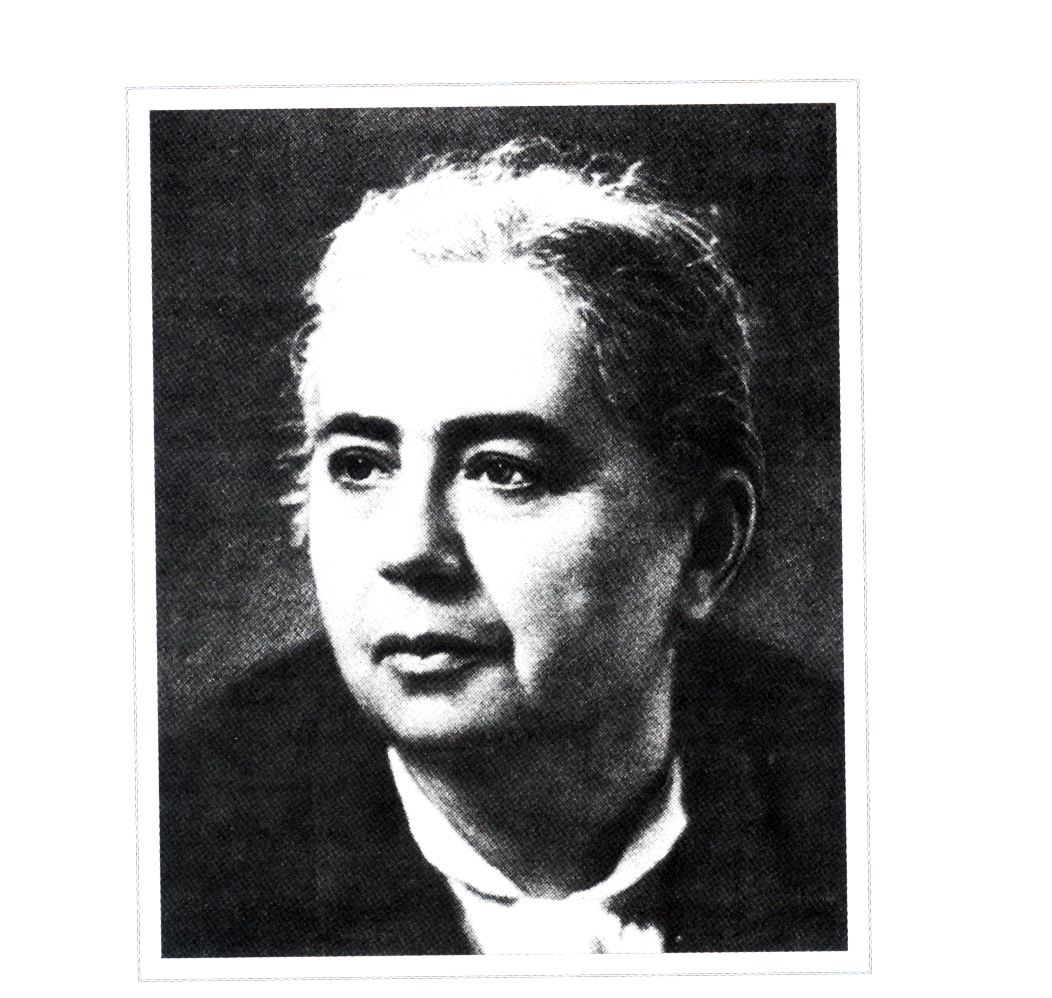
Much has been written about Uzeyir Hajibeyov. However, I believe that everyone who had the chance to meet him can share a wealth of stories that, along with their memories, enhance our understanding of a remarkable musician and individual who played an extraordinary role in the history of Azerbaijani music. Therefore, I would like to share some pages from the unforgettable Uzeyir Bey's life that will remain etched in my memory forever.
From 1922 to 1923, while I was a student in the piano department of the music college within the Baku city public education department, I was invited to teach piano at the women's seminary, which was included in the curriculum for the first time. There were undoubtedly many professional musicians with extensive experience and expertise. However, I was likely chosen because I spoke both my native language and Russian, allowing me to assist the girls who didn't know Russian with their lessons.
Incorporating music classes into the seminary program demonstrated that the school leadership recognized the significant role of music in the overall development of future specialists.
Madina Khanum Giyasbeyova and her deputy, Govhar Khanum Usubova, led the seminary. Among the teachers were highly qualified specialists such as Khadija Khanum Aghayeva, Shafiga Khanum Afandizadeh, Naima Khanum Gaziyeva, along with educators like Fatma Khanum Murzabeyova and Badisaba Khanum Kocharli. It was at this seminary that I first met Uzeyir Hajibeyov. He initially organized a small choir of girls. Gradually, this choir evolved into a large performing group that introduced schoolchildren to the works of Azerbaijani composers and performed in clubs.
Once, during a class, Uzeyir Bey entered the classroom and asked if I was participating in the choir's work as an accompanist. Of course, I wanted to do this, but since it was my first time playing this role, I was afraid I couldn't handle it. As always, Uzeyir Bey came to my aid. He gave me notes, and two days later, he listened to me, provided instructions on the nature and tempo of the music, and suggested that I attend rehearsal. From then on, I regularly participated in the seminary choir's extensive performances. It was easy to work with Uzeyir Bey because all his instructions were always based on logic and the great artist's knowledge of his craft.
I was introduced to Uzeyir Bey's beautiful, wonderful music and folk songs. The girls sang the mesmerizing "Evening came" from the opera "Asli and Karam" with Uzeyir Hajibeyov's gorgeous music, the impressive and expressive "Shabi-Hijran" chorus from the opera "Leyli and Majnun," and the beautiful melodic aria of Khurshidbanu from the opera "Shah Abbas and Khurshidbanu" in unison, filled with sadness and sincerity.
Uzeyir Bey always performed with great enthusiasm with the choir. He placed great importance on the widespread dissemination of music among the masses. The humor characteristic of Uzeyir Bey always brought joy to people and instilled a sense of optimism in them. Once, when I asked him, "Uzeyir Bey, please, may I be released from work tomorrow evening?" he answered very seriously: "Of course, of course, but you must be at home." From this, it was clear that I was not truly free.
We met with him almost daily after the music college he directed merged with the Azerbaijan State Conservatory in 1926.
He was an unforgettable personality who never left any issue unanswered and could always provide advice and assistance when needed.
When I was the director of the ten-year music school, Uzeyir Bey asked me to take on the position of deputy director of the Azerbaijan State Conservatory for the teaching department. Given the circumstances, I had to agree, even if only temporarily. The workload kept me extremely busy, leaving me with insufficient time for my role as school principal. After a while, I approached Uzeyir Bey to request that he relieve me of my position as deputy director of the conservatory. Uzeyir Bey calmly asked, "Does your new position interfere with personnel training for the conservatory?" I attempted to explain my perspective, stating that remaining at the school and focusing on my role there would be more appropriate. Uzeyir Bey, who valued the ten-year music school that directly trained personnel for the higher school, suggested that I accompany him to the Department of Arts under the Council of Ministers of the Azerbaijan SSR. Upon entering the office of M. Ibrahimov, the head of the Department of Arts, Uzeyir Bey requested that I be relieved of my deputy director position at the conservatory. Mirza Ibrahimov was surprised by such an unexpected request and inquired, "Uzeyir Bey, you have repeatedly requested Kovkab Khanum's candidacy, so why now?" Uzeyir Bey answered briefly, "Kovkab Khanum said that her place was the school, and I agreed." Only Uzeyir Bey, someone who deeply understands the importance and impact of training highly qualified young musicians, could have acted this way.
His compassionate attitude toward people and his concern for the development of students were always reflected in his actions. For instance, in the early 1940s, when the conservatory was in a small hall on Torgovi Street, Uzeyir Bey asked me to come to his classroom in the afternoon. Upon my arrival, I greeted Uzeyir Bey and a young man sitting across from him, who was unfamiliar to me and dressed in simple clothes. Uzeyir Bey introduced us and asked me, "Can you organize a concert? A young pianist wants to play a series of J. S. Bach's preludes and fugues for conservatory students." The young pianist's name was Sviatoslav Richter. I didn't know S. Richter personally then, but back in the mid-1930s when I was in Moscow, I heard about a talented pianist among Heinrich Gustavovich Neuhaus's students. For a time, Neuhaus had been reluctant to showcase him to anyone. I enthusiastically agreed to organize a concert and went into the hall with Richter so he could inspect the grand piano. S. Richter's program was quite extensive and two concerts long. The hall was filled with listeners, and we left the doors open so students could gather in the classrooms, lobby, and hallways. All attendees were amazed by the performance of Bach's works and expressed their deep gratitude to the pianist. After the concert, S. Richter approached Uzeyir Bey and conveyed his warm appreciation for the kind welcome he received. In turn, we expressed our gratitude to Uzeyir Bey for his characteristic kindness toward the young pianist and for creating the opportunity for teachers and students to experience such an unforgettable musician. Once S. Richter left the office, Uzeyir Bey asked me to stay. I still remember his words: "Kovkab Khanum, remember my words! This young man has a great future ahead of him. Coming to such a distant place and performing for free is not something that everyone does. He is a true musician." Finally, in 1943 and 1945, when Uzeyir Bey was working on his major work, "Fundamentals of Azerbaijani Folk Music," I often met him as the future editor of the text. The years I worked with Uzeyir Bey were my life’s best and most interesting. Meetings with this wonderful musician became a real school for me, compelling me to perceive the invaluable artistic qualities of folk music in a new light. Uzeyir Bey was always eager to share his knowledge and insightful observations. Uzeyir Hajibeyov's book has become an indispensable textbook for studying Azerbaijani music, as he revealed the intricacies of the oral traditions of Azerbaijani music to a wide audience of musicians.
This book helps to study the fundamentals of Azerbaijani music even today. I am very fortunate to have had the opportunity to work with a great composer and scholar.